Beyond the Gateway of India — the Mumbai that locals actually love
Mumbai7 · Last updated June 2026 · 11 min read
Mumbai is one of the world’s great cities — loud, layered, and impossible to reduce to a checklist. Most visitors tick off Marine Drive, Elephanta Caves, and a Bollywood studio tour, and leave thinking they’ve seen it. They haven’t. This guide is for the traveler who wants to go further: the neighbourhood streets where real Mumbai life happens, the forgotten colonial libraries, the chai stalls that have been standing since before Independence. These are the places locals are surprised you found.
Forgotten Neighbourhoods Worth an Entire Afternoon
Gem 01
Khotachiwadi — A Portuguese Village Frozen in Time
Tucked inside the chaos of Girgaon, Khotachiwadi is a walled enclave of 65 heritage cottages that somehow survived Mumbai’s relentless redevelopment. Built by East Indian Catholics in the 18th and 19th centuries, the lane-hugging houses have wooden balconies, terracotta roof tiles, and hand-painted nameplates in Portuguese. Walk the narrow lanes on a weekday morning when it’s quiet, and you’ll feel like you’ve slipped into a Goa village that got lost and ended up in South Mumbai.
A handful of the houses still have families in residence, and residents are used to curious visitors — just be respectful of private property and keep noise low. The enclave is a short walk from Grant Road station.
Nearest station: Grant Road (Western Line)Best time: Weekday mornings, 8–11 AMEntry: Free
Gem 02
Matharpacady — Vasai’s Sister Colony in Mazgaon
Less photographed than Khotachiwadi but arguably more atmospheric, Matharpacady is another East Indian Catholic settlement — this one in Mazgaon, tucked between container yards and old dockyards. The houses here are larger, and some have extraordinary compound gardens that spill over their gates. The community hosts a famous street festival in late January; visit then and you’ll eat home-cooked sorpotel and drink locally brewed toddy alongside residents who are genuinely delighted to see an outsider.
Nearest station: Dockyard Road (Harbour Line)Best time: January festival or Sunday morningsEntry: Free
Gem 03
Dharavi’s Pottery Quarter — Not the Slum Tour You’re Thinking Of
Skip the voyeuristic slum tours. Instead, visit Dharavi’s Kumbharwada — the potters’ quarter — where families from Saurashtra have been throwing clay since the 1930s. Arrive early morning and you’ll find hundreds of terracotta pots air-drying on rooftops and in every available inch of laneway. Many potters are happy to let you watch, and a few welcome visitors to try the wheel. This is one of the most genuinely craft-led, un-touristy experiences available in all of Mumbai.
How to get there: Dharavi station or auto from SionBest time: 7–10 AMEntry: Free
Libraries, Archives & Institutions Almost Nobody Visits
Gem 04
The David Sassoon Library — Mumbai’s Most Beautiful Reading Room
Built in 1847 and funded by the Sassoon family, this Indo-Gothic library near Kala Ghoda has a breathtaking double-height reading room with original wooden galleries, ceiling fans that have been spinning for over a century, and regulars who sit in the same chairs every single day. Membership is cheap and short-term day passes are available — pay the small fee, walk upstairs, find a chair by the arched window, and just sit. You don’t need to read anything. The room itself is the experience.
Location: Mahatma Gandhi Road, Kala GhodaHours: Mon–Sat, 8 AM – 8 PMEntry: Day pass available at reception
Gem 05
Chhatrapati Shivaji Maharaj Vastu Sangrahalaya’s Basement Galleries
Most visitors to the CSMVS (the Prince of Wales Museum) do a single lap of the main galleries and leave. The real finds are in the lesser-visited wings: the Natural History gallery, the Pre-Columbian and Western Art section (an extraordinary anomaly in Mumbai), and the textile collection upstairs. There’s almost never a crowd in these rooms, and they contain some of the most peculiar and underrated objects in any museum in India. Ask at the information desk for the current location of the decorative arts collection — it moves between galleries and is worth hunting down.
Location: 159-161, MG Road, FortTip: Buy the audio guide — it’s exceptional
Insider Note
The best version of Mumbai is experienced on foot between 7 and 10 AM, before the heat arrives and before the city becomes purely transactional. Build your itinerary around early mornings and you’ll see a city most visitors never do — dabbawalas collecting tiffins, flower markets winding down, fishermen returning at Sassoon Docks, office wallahs doing their morning puja at pavement shrines.
Eating & Drinking Like You Actually Live Here
Gem 06
Kyani & Co — Mumbai’s Oldest Irani Café, Still Going
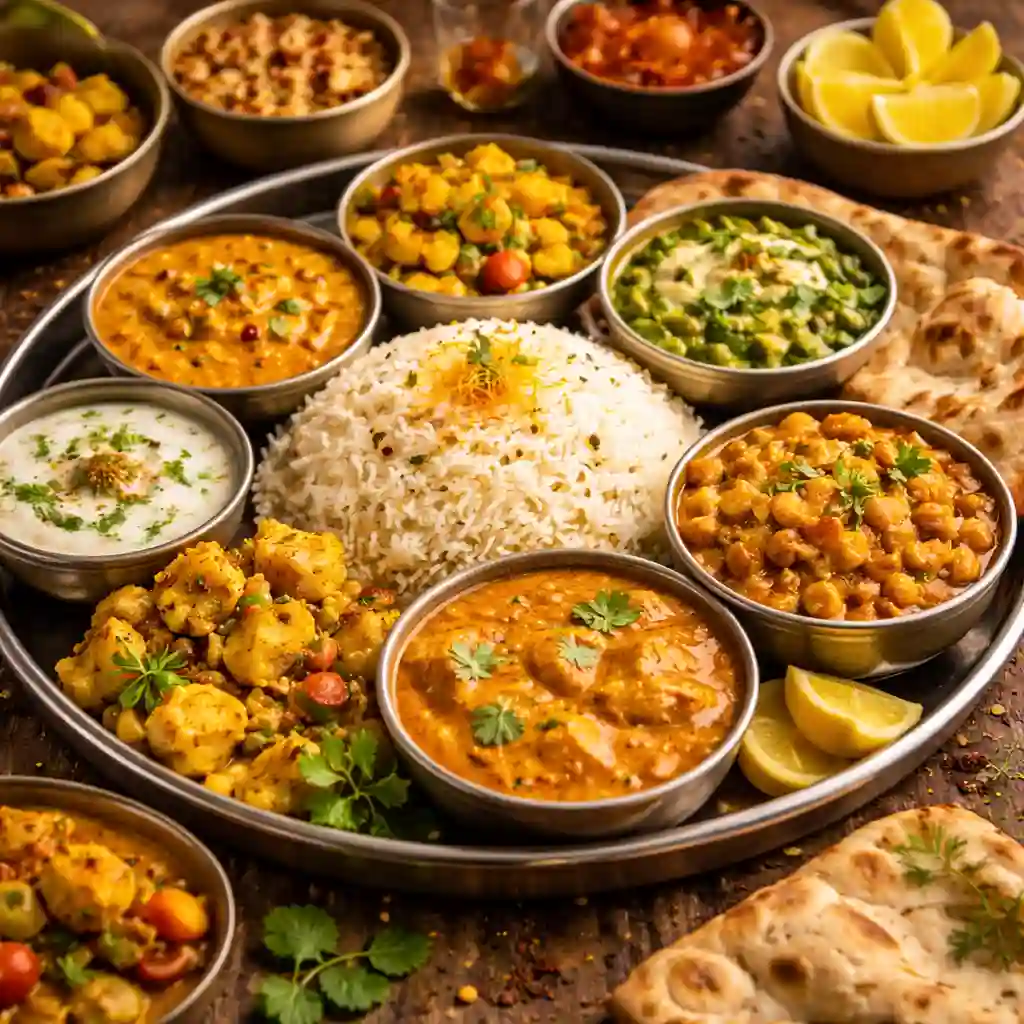
The Irani cafés of Mumbai are a dying institution — Persian immigrants opened them in the late 19th and early 20th centuries and they became the city’s original democratic dining rooms. Kyani & Co near Marine Lines, dating to 1904, is one of the last survivors still running in its original form: marble-top tables, mismatched wooden chairs, and the best bun maska (bread and butter) in the city, served with a glass of cutting chai. Breakfast here costs less than a coffee at an airport lounge and is infinitely more satisfying.
Location: JSS Road, near Marine Lines stationOrder: Bun maska, mawa cake, cutting chaiOpens: 7 AM daily
Gem 07
Mahesh Lunch Home (Fort) for Lunch on a Weekday
Mahesh in Juhu gets mentioned in every travel guide. But the original Fort branch — packed with lawyers and bankers from the nearby courts and offices — is a different experience entirely. Arrive at 12:30 PM on a weekday, take a seat at a shared table, and order the surmai fry (king fish), clams in butter garlic, and a bhakri. Nobody is performing for tourists here. The food is the same (exceptional), but the room feels like what it actually is: a beloved institution that has been feeding the same people for decades.
Location: Cawasji Patel Street, FortDon’t miss: Clams, surmai fry, solkadhi
Gem 08
Sassoon Docks at 5:30 AM — The Fish Market Before the Fish Market
Mumbai’s largest wholesale fish market at Colaba comes alive before dawn, when fishing boats unload the night’s catch and auction bidding happens in rapid-fire Marathi and Koli. The smell is genuinely intense, the colours are extraordinary — pink pomfret, silver ribbonfish, heaps of translucent prawns — and the light in that hour, as the sun comes up over the water, is unlike anything else in the city. Bring proper footwear (the floor is wet), keep your phone close, and ask before pointing a camera at any individual person.
Location: Sassoon Dock Road, ColabaArrive: 5:30–6:30 AM, any day except SundayEntry: Free (public market)
Experiences Most Guidebooks Skip Entirely
Gem 09
Take a Virar Fast — Not to Virar, Just for the Ride
Mumbai’s suburban railway carries over 7.5 million passengers a day, making it the densest rail system on Earth. Most tourists use it nervously for one or two stops. Instead: on a weekday afternoon (after 3 PM, before peak hour), buy a return ticket to Virar and simply ride. Find a spot near a door, let the city unspool — the dharavi waterways, the mangroves, the sudden reveal of the sea — and watch how 13 million commuters actually move through their city. The journey itself is one of Mumbai’s great unrepeatable experiences. The Virar fast takes about 70 minutes each way.
Board from: Churchgate or DadarAvoid: 8–11 AM and 5–8 PM peak hoursFare: Under ₹50 for full journey
Gem 10
Banganga Tank — The Sacred Pond That Predates the City
Legend holds that the sage Parashurama shot an arrow into the earth here, causing water to spring up in a direct connection to the Ganges — hence the tank’s name. This stepped tank in Walkeshwar, perched on the Malabar Hill ridge, has been a pilgrimage and bathing site for over 1,200 years. The ghats surrounding it are lined with small temples, presided over by priests and sadhus, and the whole complex is embedded in a quiet residential pocket of one of Mumbai’s wealthiest neighbourhoods. The juxtaposition — ancient ritual life, surrounded by high-rises — is as Mumbai as it gets.
Location: Walkeshwar Road, Malabar HillBest time: Early morning, during pujaEntry: Free (active temple site)
Gem 11
An Evening at Prithvi Theatre, Juhu
Prithvi is Mumbai’s most beloved small theatre — family-run, intimate, and the spiritual home of Hindi stage drama. Even if you don’t understand the language, a performance here gives you access to a room where Mumbai’s creative class has gathered for generations. The café outside, a Bombay institution in its own right, serves tea and sandwiches under fairy lights and is reliably full of writers, directors, and actors between shows. Check the monthly programme online; English performances and experimental theatre are featured regularly.
Location: Janki Kutir, JuhuTickets: Book at prithvitheatre.orgCafé opens: From late afternoon
Gem 12
Versova Koliwada — Mumbai’s Original Fishing Village
At the western end of the Versova metro station sits Mumbai’s oldest fishing settlement, home to the Koli community whose ancestors were the island’s original inhabitants before anyone called it Bombay. The lanes are narrow, boats are repaired on the beach in the open air, and the catch is sold directly from the boats in the morning. A short walk from the metro, it’s accessible, un-curated, and deeply at odds with the shiny new apartments that now surround it on three sides. The contrast alone makes it worth an hour of your time.
Nearest metro: Versova (Line 1)Best time: Weekday mornings, 7–9 AMEntry: Free
Frequently Asked Questions
Are these hidden gem areas in Mumbai safe for tourists?
Yes, all the locations listed are accessible and safe during normal visiting hours. Mumbai is broadly welcoming to visitors. Standard precautions apply: keep valuables secured, don’t walk with your phone displayed in crowded areas, and visit busy markets and docks early in the morning when activity is highest and visibility is best. If in doubt, ask your hotel or a local for current conditions.
How many days do I need to visit all these places?
You could reasonably cover all 12 in 4–5 days if you plan your route by geography — South Mumbai gems on one day, Central Mumbai on another, Juhu and Versova on a third. The railway ride is best built into a transition between areas. Early starts will serve you well throughout.
What’s the best time of year to visit Mumbai?
November through February is the most comfortable window — warm and dry, with manageable humidity. October and March are shoulder months that can work well and are less crowded. The monsoon (June–September) transforms the city completely and is beloved by photographers and adventure-minded travellers, but the fish markets and dock visits become harder to pull off.
Do I need to book anything in advance?
Prithvi Theatre performances should be booked online in advance, especially for weekend shows. Everything else on this list is walk-up and free. The CSMVS museum now sells tickets online which can save queue time during peak tourist season.
Can I cover these places without speaking Hindi or Marathi?
Comfortably, yes. Mumbai has one of the highest rates of English fluency in India, and in the areas covered here — particularly South Mumbai — you’ll find it easy to navigate. A few words of greeting in Marathi (namaskar) or Hindi (namaste) are always warmly received and never go amiss.
The Mumbai You Didn’t Know You Came For
The best experiences in Mumbai are rarely ticketed, rarely crowded, and almost never on the first page of a search result. They’re in the early morning, in the city’s oldest quarters, in the faces of people who have been living this same extraordinary daily life for generations. The twelve places above are a starting point — but Mumbai rewards those who wander. Take a turning you haven’t planned, follow the smell of frying fish or fresh jasmine, and see where it leads.
That’s Mumbai. It never quite ends.

Leave a Reply