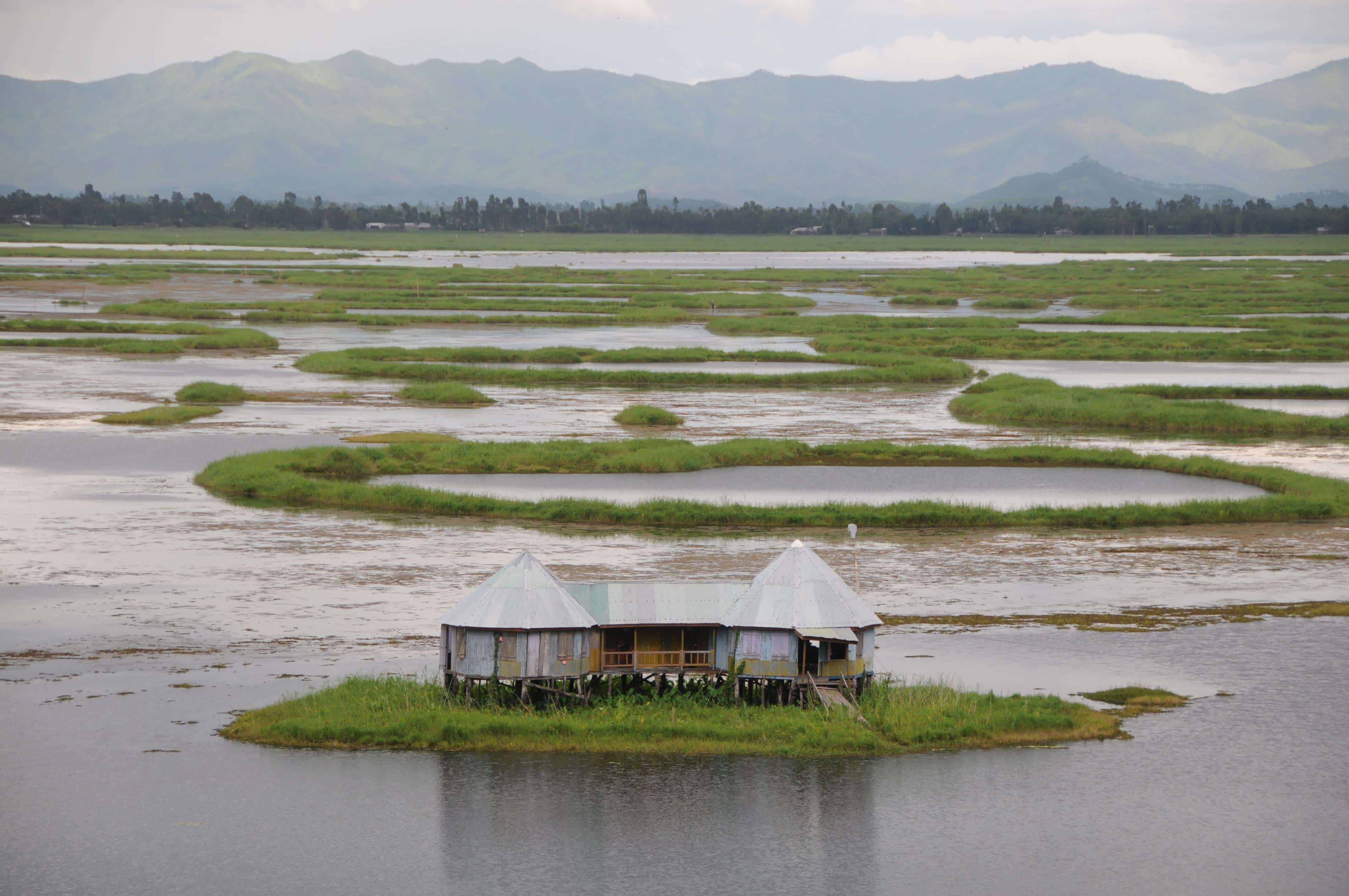
Picture yourself in a boat drifting across a massive lake where patches of bright green land seem to float freely like giant living rafts. These aren’t ordinary islands—they shift slowly with the wind and waves carrying grasses trees small animals and even people on their surface.
Welcome to Loktak Lake in Manipur where Keibul Lamjao National Park holds the title of the world’s only floating national park. Built entirely on phumdis thick floating masses of vegetation soil and decaying matter this place feels like nature’s own magic trick.
What draws people in isn’t just the beauty—it’s the story of survival. A rare deer walks across these moving meadows a community lives in harmony with the water and an entire ecosystem hangs in delicate balance. But modern pressures are testing this wonder. Let’s explore what makes India’s floating national park so special.
The Heart of Loktak Lake
Loktak Lake sits in the heart of Manipur as the largest freshwater lake in Northeast India. Its size changes with seasons stretching from around 250 square kilometers in dry months to nearly 500 during heavy rains. The lake measures roughly 26 km long and 13 km wide with an average depth of about 2.7 meters though it shallows to less than a meter in places.
This isn’t a still pond. Water levels pulse naturally feeding a rich wetland. Fourteen small hill islands like Sendra Thanga and Ithing rise from the water adding drama to the landscape. The lake drains the Manipur River basin covering a catchment of nearly 4 947 square kilometers—about 22 percent of the state.
Loktak earned Ramsar status in 1990 as a wetland of international importance. That recognition highlights its role in supporting biodiversity flood control and livelihoods for thousands of local people.
Understanding Phumdis—The Floating Foundation
Phumdis are the stars of this show. The Manipuri word means floating mats and that’s exactly what they are—dense layers of soil vegetation organic debris and biomass that accumulate and float thanks to trapped gases and buoyancy.
These mats form from decaying plants reeds grasses and animal remains mixing with soil particles. Over time they thicken into solid platforms. In parts of the main lake phumdis can grow 0.8 to 2 meters thick within six months. In Keibul Lamjao they build more slowly at about 0.1 meter per half-year but still create a spongy carpet strong enough to support weight.
Phumdis aren’t fixed. Wind currents and water flow make them drift merge or split. Some stay rooted near shores while others roam freely. This dynamic movement shapes the entire ecosystem creating channels open water pockets and ever-changing habitats.
Loktak Lake & Phumdis Key Facts
| Feature | Details |
|---|---|
| Lake Area (variable) | 250–500 sq km (seasonal) |
| Average Depth | 2.7 m |
| Phumdi Thickness (main lake) | 0.8–2 m in 6 months |
| Phumdi Thickness (KLNP) | ~0.1 m per 6 months |
| Largest Phumdi Area (KLNP) | ~40 sq km |
| Ramsar Designation | 1990 |
These floating structures make Loktak unlike almost any other lake on Earth.
Keibul Lamjao National Park—The World’s Only Floating One
Declared a national park in 1977 Keibul Lamjao covers 40 square kilometers almost entirely on phumdis in the southeastern corner of Loktak. A thin strip of firmer ground cuts through it dividing the area into northern and southern zones.
The park forms the core of the larger Keibul Lamjao Conservation Area which adds buffers of Loktak Lake (140 sq km) and Pumlen Pat (43 sq km). This setup protects not just land but a whole floating world.
UNESCO lists it on the tentative World Heritage list recognizing its unique geology and ecology. No other national park floats—making this spot truly one-of-a-kind.
But here’s the surprising part… what looks solid underfoot can shift suddenly. Animals and people learn to move carefully across these living platforms.
The Sangai Deer—Symbol of Survival
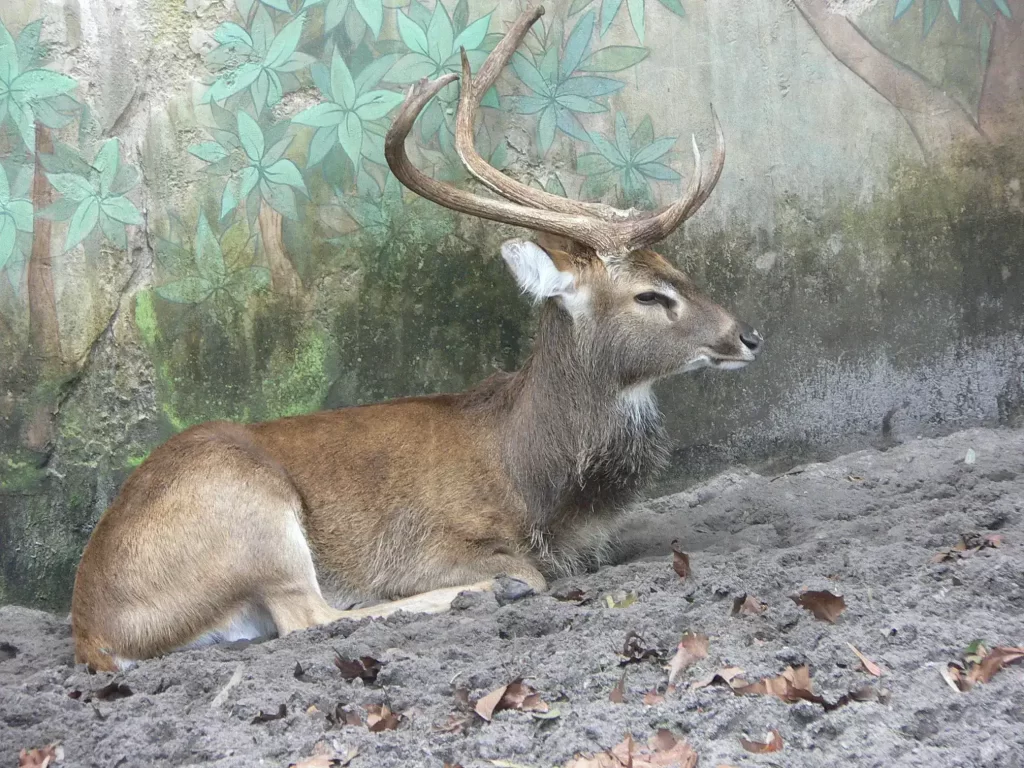
The park’s main purpose is protecting the Sangai or Manipur brow-antlered deer (Rucervus eldii eldii). This elegant animal nicknamed the “dancing deer” for its graceful high-stepping gait was once feared extinct.
Environmentalist E.P. Gee rediscovered a small group in the early 1950s hidden on the phumdis. That moment saved the species. From just 14 counted in 1975 numbers grew through protection—reaching 155 by 1995 204 in 2013 and around 260 by recent estimates though some studies suggest lower wild breeding adults around 64 with others in captivity.
Sangai have wide splayed hooves perfect for walking on soft floating mats without sinking. They feed on phumdi grasses like Zizania latifolia and stay tied to this habitat found nowhere else.
Did You Know?
The Sangai was thought globally extinct until the 1950s rediscovery on Loktak’s phumdis. This tiny surviving herd sparked the creation of Keibul Lamjao National Park turning a hidden refuge into a dedicated conservation zone.
Rich Biodiversity Beyond the Deer
Phumdis teem with life. Over 185 plant species grow here including dominant grasses sedges and economically useful ones for food fodder and medicine.
The lake hosts 54 fish species—28 common year-round and 26 seasonal or rare. Amphibians number 25 while birds include 58 species with 32 855 waterbirds counted in recent surveys. Migratory visitors arrive November to March. Threatened species like black-necked stork oriental darter and ferruginous pochard appear alongside the rare Mandarin duck.
Zooplankton shines with 189 species and rotifers boasting 120 types—the richest in India. This tiny life supports the whole food web.
Other mammals include hog deer (around 212 in older counts) otters and pythons. The floating meadows create perfect breeding grounds for aquatic and terrestrial species.
Fun Facts
- Phumdis can form thick enough platforms to hold entire floating villages called phumshangs where locals live and fish.
- The Sangai’s wide hooves act like natural snowshoes distributing weight over soft surfaces.
- Loktak features 14 hill islands rising like green jewels from the water.
- Rotifer diversity in the lake is unmatched in Indian aquatic systems with unique biogeographic elements.
Tourism Experiences at India’s Floating National Park
Most visitors start from Moirang or Sendra Island. Boat rides take you through narrow channels between phumdis offering close views of the floating landscape.
Spot Sangai from watchtowers or during early morning boat safaris. Birdwatching peaks in winter with migratory flocks. Fishermen demonstrate traditional net-casting from canoes while guides share stories of local life.
The Forest Department maintains rest houses and observation points. Sunrise over the misty lake with phumdis glowing gold creates unforgettable scenes. Sunset turns the water into a mirror reflecting clouds and green mats.
Eco-tourism grows with government plans for centers around the lake. Respect rules—no disturbing wildlife or phumdis—to keep this fragile place thriving.
As naturalist E.P. Gee who helped rediscover the Sangai wrote the quiet persistence of rare creatures in hidden places teaches us humility toward nature’s delicate designs.
India’s Floating National Park FAQ
What makes Keibul Lamjao the world’s only floating national park?
Most of its 40 sq km rests on movable phumdis instead of solid ground creating a unique floating habitat.
How do phumdis form and stay afloat?
They build from decaying vegetation soil and organic matter with trapped gases providing buoyancy letting them float and grow.
What’s the current Sangai deer population?
Recent estimates hover around 260 though some studies note fewer breeding adults in the wild with conservation ongoing.
Can visitors see the Sangai deer easily?
Boat tours and watchtowers offer good chances especially early morning but sightings depend on the deer’s movement across phumdis.
What threats does Loktak Lake face?
Phumdi overgrowth from altered water levels Ithai Barrage impacts siltation pollution and encroachment challenge the ecosystem.
How does the Ithai Barrage affect the lake?
It raised water levels preventing phumdis from grounding seasonally leading to thinning mats and changes in biodiversity.
Reflections on a Fragile Wonder
Gliding past shifting green islands hearing gentle water lap against boat sides and maybe catching a glimpse of a Sangai pausing to look back leaves a deep impression. India’s floating national park reminds us how creative and vulnerable nature can be. In Manipur’s quiet waters a rare deer survives on moving ground people adapt to a changing lake and an ancient ecosystem holds on.
Protecting this place means balancing human needs with the delicate dance of water plants and wildlife. Visit if you can—but more importantly carry the wonder home and think about what small actions help places like this endure.
References
- UNESCO Tentative Lists – Keibul Lamjao Conservation Area https://whc.unesco.org/en/tentativelists/6086
- Wikipedia – Loktak Lake https://en.wikipedia.org/wiki/Loktak_Lake

Leave a Reply