Kerala, India:
God’s Own Country
The complete 2026 guide for American travelers — backwater houseboats, mist-covered tea gardens, Ayurveda, Kathakali dance, elephant sanctuaries, spice forests, and the most serene corner of India you haven’t been to yet.
Every once in a while, a place earns its nickname. Kerala — the narrow strip of tropical land sandwiched between the Western Ghats and the Arabian Sea on India’s southwestern tip — genuinely deserves to be called God’s Own Country.
In a country of 1.4 billion people and extremes in every direction, Kerala stands apart. It is quieter, greener, cleaner, and more laid-back than anywhere else in India. The literacy rate is the highest in the country. The backwaters — a 900-kilometre network of canals, lakes, and lagoons — are unlike anything else on Earth. The food is extraordinary. And the Ayurvedic wellness tradition here is the oldest, most sophisticated, and most authentic you will find anywhere in the world.
For American travelers who have already done the Golden Triangle (Delhi–Agra–Jaipur) or who want something radically different from North India’s heat and crowds, Kerala is the answer. It is tropical, it is deeply cultured, it is completely manageable to travel independently, and it has a range of experiences — from wild tea-covered mountains to houseboat sunsets to elephant encounters — that simply don’t exist anywhere else.
This guide walks you through everything: what makes Kerala different, the five distinct experiences that define any Kerala trip, a 7-day itinerary, honest budget advice, and the practical tips that make the difference between a good trip and an extraordinary one.
“Kerala is the only Indian state to appear on both National Geographic’s 50 Places of a Lifetime and the New York Times’ 52 Places to Go. In 2026, Rough Guides ranked it the world’s #1 travel destination.”
— Mumbai7.com Travel Research, 2026December–January is peak season — book houseboats and popular hotels 2–3 months in advance. Kerala’s monsoon (June–September) is dramatic and beautiful but limits outdoor activities.
Why Kerala Is Completely Different from the Rest of India
Most Western travelers arrive in India through Delhi or Mumbai and form their first impressions from the north — the heat, the crowds, the relentless sensory overload of Rajasthan or the Gangetic plains. Kerala is the antidote to all of that, and it’s as Indian as anything in the country.
Kerala’s difference starts with geography. The state is a long, narrow ribbon of land — 580 kilometres long, but only 35–120 kilometres wide — compressed between two dramatic natural barriers: the Western Ghats mountain range to the east (rising to 2,695 metres) and the Arabian Sea to the west. This geography created a microclimate of extraordinary fertility and biodiversity. Kerala contains 44 rivers, one of the world’s most intact ancient spice trade routes, and a culture that was shaped as much by Arab and Portuguese traders as by the rest of India.
The result is a state that feels genuinely unlike the India of postcards. It is lush and tropical rather than arid. It has a strong Christian community (Kerala’s Christians date back to the 1st century AD — far earlier than European Christianity reached most of Europe) alongside a major Muslim community and Hindu majority, all living with a degree of social cohesion unusual in the subcontinent. English is far more widely spoken here than almost anywhere else in India. And the legendary Keralan hospitality — rooted in the concept of atithi devo bhava (the guest is God) — makes first-time travelers feel remarkably at ease.
🌿 The Kerala difference in numbers: 100% literacy rate (highest in India). 44 rivers. 900 km of backwater canals. World’s oldest Ayurvedic tradition. Three distinct ecosystems — mountains, plains, and coast — within 2 hours’ drive of each other.
The 5 Experiences That Define a Kerala Trip
Kerala is best understood not as a list of destinations but as a sequence of distinct experiences — each one completely different from the last. A great Kerala itinerary moves through at least three or four of these.
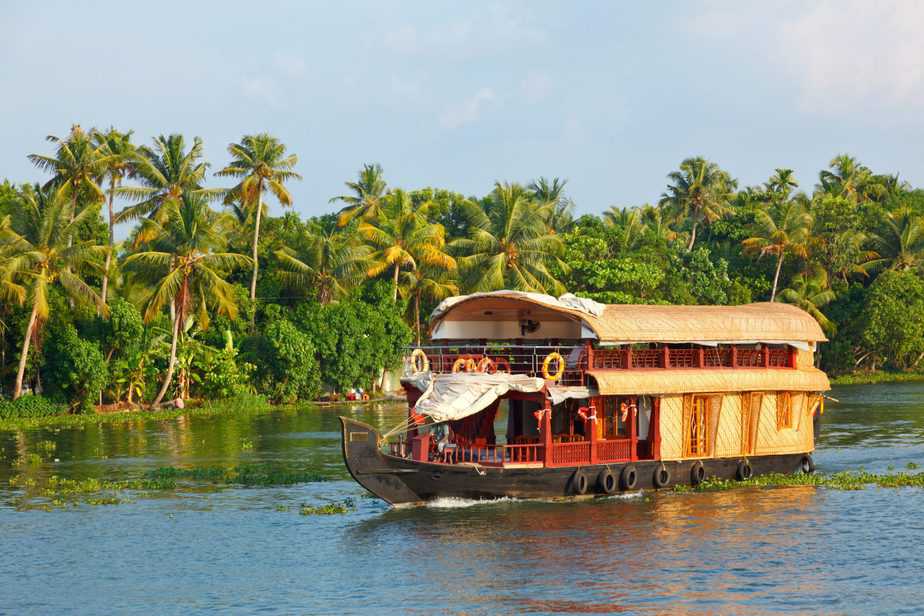
Spending a night on a traditional kettuvallam (rice boat converted to a houseboat) drifting through Kerala’s 900 km of interconnected backwater canals is one of the most unique travel experiences in Asia. The boats are wooden, beautifully appointed, and come with a captain, cook, and caretaker. You eat freshly caught fish cooked in coconut oil while paddy fields and coconut palms drift past in complete silence. Nothing prepares you for how peaceful it is.
Munnar is the tea capital of South India — a hill station at 1,600 metres covered almost entirely in a continuous carpet of emerald tea plants. The drive up from Kochi is one of the most spectacular in South India, passing waterfalls, spice plantations, and mist-covered valleys. At the top, the air is cool and clean, the views are extraordinary, and the tea — bought directly from estate shops — is the finest you’ll ever drink. Eravikulam National Park, home to the endangered Nilgiri tahr, is 15 minutes from town.
Ayurveda — India’s 5,000-year-old system of medicine — is practiced most authentically in Kerala. The state’s climate, monsoon season, and botanical tradition make it the world’s most recognized Ayurvedic destination. For Western visitors, even a single 90-minute Abhyangam (full-body warm oil massage) at a proper Kerala Ayurvedic centre is transformative. Longer programmes (7–21 days) for detox, weight management, or chronic conditions are what draws health-seekers from across the world.
Fort Kochi is a small peninsula at the mouth of Kochi harbour where the Portuguese, Dutch, British, Jewish, and Chinese all left their mark across 500 years of trading history. The result is unlike anywhere else in India: narrow streets lined with colonial bungalows, Chinese fishing nets silhouetted against the harbour sunset, ancient synagogues and churches, and a thriving cafe and contemporary art scene that attracts a creative community from across the world. The Kochi-Muziris Biennale (Asia’s largest contemporary art event) brings international artists here every two years.
Periyar is Kerala’s most famous wildlife sanctuary — 925 sq km of forest surrounding an artificial lake in the Western Ghats, home to tigers, leopards, elephants, gaur, and over 200 bird species. The famous boat safari on Periyar Lake offers extraordinary wildlife encounters — elephants wading into the water at dawn are a regular sight. The surrounding Thekkady area is also the heart of Kerala’s spice country: cardamom, pepper, cinnamon, and nutmeg grow in forests you can walk through on guided plantation tours.
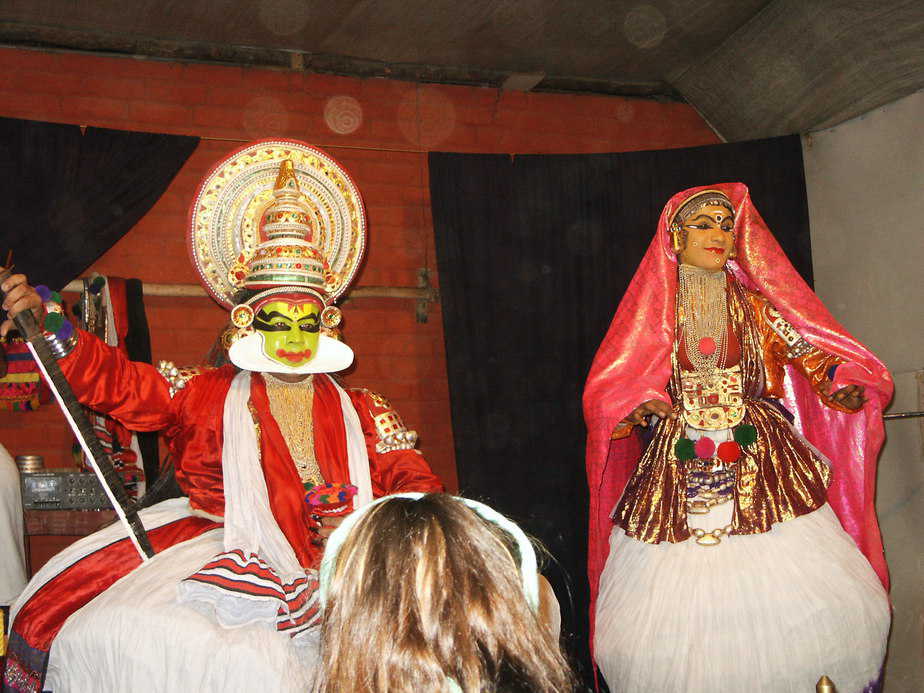
Kathakali is one of the world’s most elaborate performing art forms — a classical dance-drama combining dance, music, mythology, and face painting that has been performed in Kerala for over 400 years. The performers spend hours in makeup transforming their faces into the characters of Hindu epics. A professional Kathakali performance is extraordinary to watch — and Fort Kochi has several dedicated theatres with pre-show backstage makeup demonstrations that make the experience fully accessible to first-time Western viewers.
The Kerala Backwater Houseboat — A Complete Guide
The Kerala houseboat is probably the single most photographed and most dreamed-about experience in all of South India. Every American who has looked up “Kerala travel” has seen the image: a wooden boat gliding through a mirror-still canal lined with coconut palms and paddy fields. Here is everything you need to know to actually do it right.
What Is a Kettuvallam?
A kettuvallam is a traditional rice boat — originally used to transport rice and spices along Kerala’s backwater canals — that has been converted into a floating guesthouse. The boats are built from bamboo poles, wooden planks, and coir rope (no nails used in the traditional construction), covered with a bamboo-woven canopy, and fitted with 1–3 bedrooms, a dining area, a kitchen, and a small sun deck at the front. Each boat comes with a permanent crew: a captain/driver, a cook who prepares all meals, and an oarsman.
What to Expect on the Boat
- Check-in: 12 noon. Check-out: 9 AM next day (standard overnight package)
- The route: Your captain navigates the backwater network — wide Vembanad Lake, narrow village canals, and open lagoons. You rarely see the same scenery twice
- Food: Three full Kerala meals prepared onboard by your cook. Breakfast, lunch, and dinner are all included — typically freshwater fish curry, rice, coconut-based vegetables, and fresh fruit
- Sounds: Almost complete silence, broken only by the motor (switch it off and ask your captain to pole — entirely worth requesting), birdsong, and the occasional fishing boat passing
- Internet: Essentially none once you leave the main canal. This is not a problem. It is the point.
How to Choose Your Houseboat
- Deluxe category: Air-conditioning at night only. Good for budget-conscious travelers. From ₹10,000–12,000 (~$115–140) for a 1-bedroom overnight
- Premium category: Full-time AC, better furnishings, glass viewing panels. From ₹15,000–20,000 (~$175–235)
- Luxury category: Large bedrooms, private sun deck, chef-curated meals, high-speed fan systems. From ₹25,000+ (~$295+)
- Couples tip: A 1-bedroom premium boat for two is the sweet spot — the most intimate and most beautiful way to experience the backwaters
⚠️ Book directly with registered operators. Alleppey has hundreds of houseboats of wildly varying quality. Book through Kerala Tourism certified operators or verified platforms like Kerala Boat House Association. Do not book from touts at the jetty. Always insist on seeing photos of the exact boat you’re booking, not a generic stock image. Prices increase significantly December 20 – January 10.
Munnar — Waking Up Inside a Tea Garden
The drive from Kochi to Munnar is one of the great road journeys in South India. As you leave the flat coastal plain and begin climbing the Western Ghats, the road narrows and winds through rainforest, past waterfalls that tumble directly onto the road, through spice plantation villages where the air smells of cardamom, and eventually into a landscape of pure, continuous green: the Munnar tea gardens at 1,600 metres above sea level.
Munnar produces some of the world’s finest single-estate teas — the altitude, mist, and soil combination creates a flavour profile quite different from Darjeeling or Assam. The TATA Tea Museum in town tells the full story of how the British established these gardens in the 1880s, and guided plantation walks let you follow tea from leaf to cup. Buy directly from estate shops here — tea is dramatically fresher and cheaper than at any airport or hotel shop.
Top Things to Do in Munnar
- Eravikulam National Park: Home to the endangered Nilgiri tahr (a rare mountain goat), rolling grasslands, and extraordinary views. The park road is one of the best places in the world to photograph endemic wildlife at close range. Open September–May; closed June–August for calving season
- Top Station viewpoint: The highest point accessible by road in Munnar (1,700m), offering views across the tea estates and into Tamil Nadu on clear mornings. Go before 9am to beat cloud cover
- Mattupetty Dam: A scenic reservoir with boat rides and good birdwatching. The drive along the reservoir edge is lovely
- Plantation walks: Most good hotels in Munnar can arrange 2–3 hour guided walks through working tea, cardamom, and pepper plantations. A genuinely memorable way to understand the landscape
- Sunrise from your hotel: In Munnar, an east-facing room at a hill-perched hotel means waking up to a sea of green with mist rising from the valleys below. This requires no planning — just an early alarm
🍵 Buy tea the right way: Skip the large shops on the main road and ask your hotel or a plantation worker to recommend an estate shop selling directly to consumers. You’ll pay half the price and get tea that was harvested within weeks, not months. A 250g box of quality single-estate Munnar tea makes a perfect gift and costs ₹200–500 (~$2.50–6).
Ayurveda in Kerala — What It Actually Is and How to Experience It
Ayurveda is not a spa treatment. It is a 5,000-year-old system of medicine — one of the world’s oldest — based on the principle that health is a state of balance between body, mind, and the natural world. Kerala is its global home: the climate, the botanical tradition, and the unbroken lineage of Ayurvedic physicians here make Kerala the only place in the world where you can experience truly authentic Ayurvedic treatment.
For Western visitors who have never encountered it, here is a plain-English explanation: Ayurveda believes that every person has a unique constitution (prakriti) made up of three energies (doshas — Vata, Pitta, Kapha). Disease is caused by imbalance between these; treatment involves herbal medicines, specific massage therapies, diet, yoga, and lifestyle adjustments tailored to restore your individual balance. At the lightest end of the spectrum, a single Abhyangam massage (two therapists applying warm medicated oil to your entire body in synchronized strokes for 60–90 minutes) is simply the most relaxing physical experience most Western visitors have ever had.
Types of Ayurvedic Experience for Visitors
- Single treatments (for first-timers): Abhyangam (oil massage), Shirodhara (warm oil poured continuously on the forehead — deeply meditative), or Pizhichil (royal oil bath). Duration 60–120 minutes. Cost $20–80 depending on centre quality. No prior knowledge needed.
- Day packages: Two or three treatments in sequence over half a day, typically including a preliminary consultation with a vaidya (Ayurvedic doctor). Cost $50–150.
- Residential programmes (7–21 days): Full immersive panchakarma detox or rejuvenation programmes with daily treatments, personalised diet, and yoga. Available at dedicated Ayurvedic resorts throughout Kerala. Cost $150–500/day at good centres.
💆 Choosing an authentic centre: Look for centres registered with the Kerala Ayurveda Practitioners’ Association (KAPA) or Kerala government-certified Ayurvedic hospitals. Avoid “Ayurvedic massage” shops in tourist areas — authentic Ayurveda begins with a doctor consultation. The best centres in Kerala are in Kovalam, Thrissur, Kottayam, and Varkala.
Fort Kochi — Your Gateway and India’s Most Charming Port Town
Almost every Kerala trip begins in Kochi (formerly Cochin), and Fort Kochi — the historic peninsula at the mouth of the harbour — deserves far more than a single transit night. This is a place where 500 years of global trade left an extraordinary architectural legacy: Portuguese colonial bungalows converted into boutique guesthouses and art galleries, a 16th-century Dutch palace, the oldest synagogue in the Commonwealth (still in use), ancient Chinese fishing nets that have operated continuously since the 14th century, and a contemporary art scene that is arguably the most vibrant in India.
Top Things to Do in Fort Kochi
- Chinese Fishing Nets at sunset: The iconic cantilevered Chinese fishing nets (cheena vala) operate on the northern tip of Fort Kochi, silhouetted against the harbour. At dusk, watching the fishermen lower and raise the nets against an orange sky is one of Kerala’s defining images
- Kathakali performance: Several dedicated theatres in Fort Kochi offer nightly performances with pre-show makeup demonstrations. See the elaborate facial painting up close before the 2-hour classical dance drama begins
- Jewish Synagogue and Jew Town: The Paradesi Synagogue (1568) is the oldest active synagogue in the Commonwealth. The surrounding Jew Town antique market has been trading since the 16th century
- St. Francis Church: The oldest European church in India (1503), where explorer Vasco da Gama was originally buried before his remains were taken to Lisbon
- Mattancherry Palace (Dutch Palace): 16th-century palace built by the Portuguese, gifted to the Raja of Cochin. Contains some of the finest Kerala mural paintings in existence
- The ferry network: The best way to experience Kochi is by the local government ferry — cross the harbour between Fort Kochi, Ernakulam, and Willingdon Island for ₹5–15. The ferry views of the harbour at golden hour are spectacular
🎨 Kochi-Muziris Biennale: Asia’s largest contemporary art festival, held in Fort Kochi every two years (next edition 2026). Transforms the entire peninsula into a sprawling open-air gallery with art installations in warehouses, courtyards, and streets. If your trip coincides with it, rearrange everything to attend.
The Perfect 7-Day Kerala Itinerary for Americans
This route enters through Kochi and covers the four essential Kerala experiences in a logical geographic loop — all distances are manageable and no long backtracking required.
What Does Kerala Cost for Americans in 2026?
Kerala is slightly more expensive than North India but extraordinary value compared to comparable experiences in Southeast Asia or the Caribbean. Here’s an honest per-day breakdown excluding flights.
| Category | Budget | Mid-Range | Luxury | Notes |
|---|---|---|---|---|
| Accommodation | $15–30/night | $50–100/night | $150–400/night | Fort Kochi heritage guesthouses are exceptional mid-range value |
| Houseboat (per couple) | $115–140 | $175–235 | $295–600 | Per boat per night including all meals and crew |
| Food (excluding houseboat) | $8–15/day | $20–40/day | $50–120/day | Kerala cuisine is outstanding at all price points |
| Private cab (intercity) | $25–45/trip | $40–70/trip | $80–150/trip | Private cab is standard in Kerala; excellent value vs tour buses |
| Ayurveda (single treatment) | $20–35 | $45–80 | $100–300+ | Price reflects quality of practitioner and oil used; don’t cheap out on Ayurveda |
| Activities & entry fees | $5–15/day | $20–40/day | $50–120/day | Kathakali ₹350–500, Eravikulam NP ₹120, Periyar boat ₹250–600 |
| Total Daily (excl. flights) | $40–70 | $100–180 | $250–600 | 7-day Kerala trip: $400–$6,000 depending on your style |
Kerala Food — Why South Indian Cooking Will Surprise You
Kerala cuisine is fundamentally different from North Indian food and almost nothing like the “Indian food” served in American restaurants. It is coconut-based, seafood-rich, spiced with freshly grown cardamom and black pepper rather than dried spice mixes, and served on banana leaves at the best local restaurants.
How to Get to Kerala from the US and Within India
From the United States
There are no direct flights from the US to Kerala. The two main connection routes are via Dubai (Emirates) or Doha (Qatar Airways) — both offer excellent 1-stop service from New York, Los Angeles, Chicago, or Washington to Cochin International Airport (COK) in approximately 18–22 hours total travel time. Kochi also has excellent domestic connections from Delhi (2 hours) and Mumbai (2 hours), so many Americans combine a Varanasi or Golden Triangle trip in North India with a Kerala extension.
🚗 Book a driver for your whole Kerala trip. A good local driver who knows the routes, can recommend stops, and handles all logistics costs approximately ₹2,500–3,500 per day including fuel and tolls. For a 7-day trip split between two travelers, this is $150–200 each — exceptional value for the convenience and local knowledge you gain.
10 Essential Tips for Americans Visiting Kerala
The best certified houseboats in Alleppey sell out December–January up to 8 weeks in advance. Book as soon as your dates are confirmed. For premium 2-bedroom boats at Christmas/New Year, book 3 months ahead. Budget boats can be booked 2–3 weeks out in shoulder season.
Kerala’s monsoon (June–September) is dramatic — heavy daily rain transforms the landscape into extraordinary deep green. Houseboat trips still run. Outdoor activities are limited. Hotels offer significant discounts (30–50%). The monsoon Ayurveda season (June–August) is actually considered the best time for treatments — the body absorbs oils better in the humid climate.
Kerala’s Hindu temples often have strict dress codes. Men must typically remove shirts and wear a dhoti (provided at the entrance). Women must wear sarees or traditional dress. Many major temples don’t admit non-Hindus to the inner sanctum. This is fine — the architecture and atmosphere are accessible from outside and equally impressive.
Kerala’s tropical climate means mosquitoes are active year-round, especially near the backwaters. Pack a strong DEET repellent (30%+), wear long sleeves at dawn and dusk, and use the mosquito nets provided by hotels and houseboats. Consult a travel medicine doctor about malaria prophylaxis before departure.
Kerala has a strong tradition of temple elephants participating in festivals. If you encounter elephants at temple festivals, maintain a safe distance and follow local instructions. Do not ride elephants at tourist camps — this practice causes suffering. The ethical elephant encounters are at Periyar (wildlife boat safaris) or the Kodanad Elephant Training Centre where you can observe at close range without riding.
Kerala has the highest literacy rate and among the highest English proficiency rates in India. Communicating with your driver, hotel, houseboat crew, restaurant staff, and shopkeepers will almost always be possible in English without difficulty. This makes Kerala significantly easier to navigate independently than most of North India.
Kerala’s best food is at ordinary “meals restaurants” (as local thali restaurants are called here) where a full banana leaf meal costs ₹80–150 ($1–2). Ask your driver or hotel to recommend the best local meals restaurant near any destination — the food at these places consistently outperforms restaurants catering to tourists at 5–10 times the price.
Airtel and Jio tourist SIMs are available inside the Kochi airport arrivals hall. Cost ~₹400 (~$5) for 30 days of data and calls. This is essential for using Google Maps between destinations, communicating with your driver, and booking the occasional impromptu restaurant. US carrier international roaming in India typically costs $10–15/day for the same functionality.
Kerala banned single-use plastic in 2019 and enforces it more rigorously than most Indian states. Bring a reusable water bottle and refill at hotels. The backwaters and national parks are sensitive ecosystems — follow all conservation guidelines and dispose of waste carefully. Several tour operators in Kerala offer carbon-offset and responsible tourism programmes.
If you have 8–10 days, add Varkala (90 min south of Alleppey) or Marari Beach to your itinerary. Varkala’s dramatic red cliffs, clean water, and clifftop restaurants make it Kerala’s finest beach destination. Marari is a quieter, coconut-palm-lined beach ideal for complete relaxation. Both are very different from anything in North India and round out the Kerala experience perfectly.
Official Website https://www.keralatourism.org/

Leave a Reply