Rajasthan, India:
The Land of Kings
The complete 2026 guide for Americans — Jaipur’s Pink City, Udaipur’s lake palaces, Jodhpur’s Blue City, Jaisalmer’s golden desert, camel safaris, palace hotels, Rajput forts, and a 10-day royal itinerary.
If you close your eyes and picture India — the palaces, the turbans, the camels, the vast golden desert, the women in crimson saris walking beside ancient forts — what you are almost certainly imagining is Rajasthan.
The largest state in India by area, Rajasthan is the country’s most cinematically spectacular region — a landscape of Mughal and Rajput architecture so extraordinary that it has appeared in dozens of films and been called the world’s greatest open-air museum. The state contains over 500 forts and palaces. Several of them have been converted into hotels where you can sleep in the actual bedrooms of maharajas. Others still have royalty living inside their walls.
For Americans, Rajasthan is both the most iconic Indian experience and, surprisingly, one of the most accessible. It is comfortably hot in winter (October to March), extremely well set up for international tourism, and connected to Delhi — 90 minutes away by fast train or one hour by flight — making it a natural extension of any Golden Triangle trip.
The four cities of Rajasthan’s royal circuit each have a distinct colour and character: Jaipur is pink and buzzing, Udaipur is blue and romantic by the lake, Jodhpur is indigo and dramatic under its hilltop fortress, and Jaisalmer is pure gold — a medieval walled city rising from the Thar Desert, where camel trains still cross sand dunes at sunset. Together, they represent the most concentrated and visually overwhelming travel experience in India.
“In Rajasthan, every city is a painting. Every fort is a story. And every sunset over the desert looks exactly the way you imagined it would.”
— Mumbai7.com Travel Desk, 2026October to February is absolutely ideal — days are warm and sunny, nights are cool, and visibility is perfect for photography. Avoid April–September: temperatures regularly exceed 43°C (110°F).
The Four Royal Cities — Rajasthan’s Essential Circuit
Each of Rajasthan’s four great cities has its own color, its own architectural identity, and its own emotional character. A complete Rajasthan trip visits all four — ideally in this order, which moves southwest from Delhi in a logical geographic sweep.
Jaipur is Rajasthan’s capital and most visited city — a planned 18th-century city whose old town was painted terracotta pink in 1876 for the visit of the Prince of Wales, a colour it has kept ever since. It is loud, colourful, chaotic, full of elephant processions, bazaars selling gemstones and block-printed textiles, and some of the most spectacular Rajput fort architecture in India. Jaipur is also the Pink City’s beating heart of luxury — some of India’s finest heritage hotels are here.
- Amber Fort — hilltop Rajput palace (UNESCO) with elephant ride up the approach road
- City Palace — partly a museum, partly still home to the royal family
- Hawa Mahal — the iconic 953-window “Palace of Winds”; photograph from the street opposite at sunrise
- Jantar Mantar — 18th-century astronomical observatory (UNESCO)
- Nahargarh Fort — hilltop fort with panoramic city views; best at sunset
- Johari Bazaar — Jaipur’s legendary gemstone and jewellery market
Udaipur is consistently voted the most romantic city in India — sometimes the most romantic city in Asia — and the photographs rarely lie. Five interconnected lakes surround the old city, which rises from the shore of Lake Pichola in a cascade of white marble palaces, step-wells, and Rajput havelis. The Taj Lake Palace — a 250-year-old white marble palace appearing to float in the middle of the lake — is one of the most iconic hotels on Earth. James Bond’s Octopussy was filmed here in 1983.
- City Palace — Rajasthan’s largest palace complex; the museum inside is extraordinary
- Lake Pichola boat ride — sunset on the lake with the City Palace reflected in the water
- Taj Lake Palace — have a drink or dinner here even if you’re not staying
- Jag Mandir Island — 17th-century island palace reached by boat; stunning courtyard
- Sajjangarh (Monsoon Palace) — hilltop fort with the finest sunset view in Rajasthan
- Bagore Ki Haveli — evening Rajasthani folk dance performance nightly
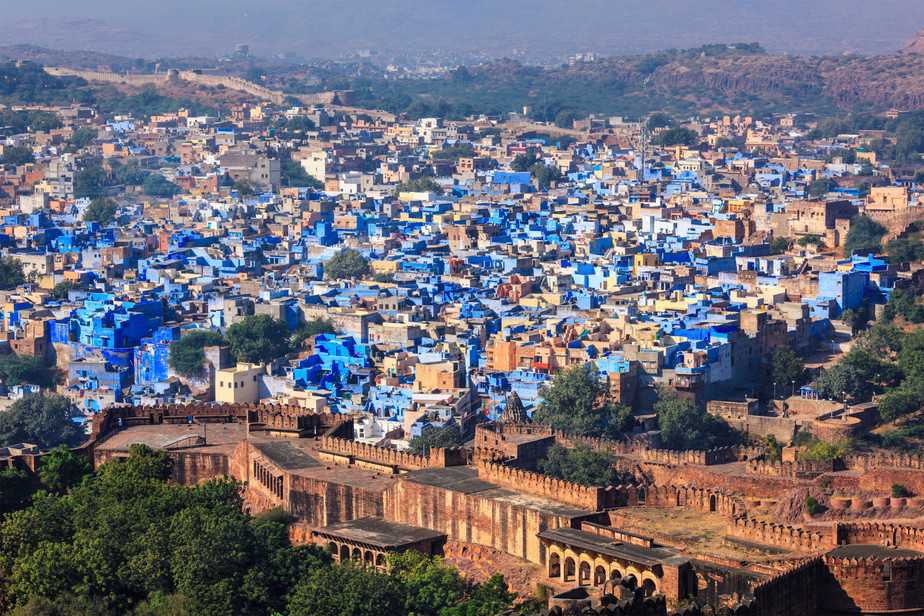
Jodhpur’s old city is painted in a hundred shades of blue — a tradition that began with Brahmin families painting their houses indigo to denote status, and spread across the entire old city until it became one of the most arresting urban landscapes on Earth. Dominating everything is Mehrangarh Fort — a massive sandstone citadel that rises 125 metres above the city on a sheer rocky outcrop, considered by many architects to be the finest fort in all of India. The view from its ramparts over the blue city below is one of those sights that you remember for the rest of your life.
- Mehrangarh Fort — the finest fort in Rajasthan; the museum inside is world-class
- Blue City lanes — walk the old city on foot in the early morning; impossibly photogenic
- Jaswant Thada — white marble memorial cenotaph with beautiful carved screens
- Umaid Bhawan Palace — part hotel (Taj), part museum, part royal residence — still occupied
- Clock Tower and Sardar Market — the city’s great bazaar for spices, textiles and Rajasthani crafts
- Desert safari, Osian — 65 km from Jodhpur; camel safari at ancient temple ruins
Jaisalmer is the most remote and the most otherworldly of Rajasthan’s four cities — a medieval walled city made entirely of golden-yellow sandstone rising from the flat Thar Desert close to the Pakistan border. Uniquely in India, nearly one-quarter of the old city’s population still lives inside the ancient fort walls, making Jaisalmer Fort the only “living fort” in Rajasthan. The surrounding desert — with its Sam Sand Dunes, ancient merchant havelis, and camel trains — provides the desert safari experience that most Americans put on their India bucket list.
- Jaisalmer Fort — the living Golden Fort; walk the ramparts at sunrise for extraordinary views
- Patwon Ki Haveli — the finest merchant mansion in Rajasthan; intricate yellow sandstone carvings
- Sam Sand Dunes & desert safari — camel ride + sunset over the dunes + overnight desert camp
- Gadisar Lake — ancient reservoir with ornate gateways; magical at dawn
- Kuldhara abandoned village — 200-year-old ghost village deserted overnight in mysterious circumstances
The Jaisalmer Desert Safari — What to Expect
The Rajasthan desert safari is one of the most searched travel experiences in India from the United States — and one of the most misunderstood. Here is an honest guide to what it actually involves and how to do it right.
What Is a Desert Safari?
A desert safari near Jaisalmer typically involves a camel ride from the edge of the city to the Sam Sand Dunes (42 km from Jaisalmer) or the Khuri Dunes (45 km), arriving at sunset, watching the sun go down over the dunes — one of the most spectacular natural spectacles in India — followed by dinner at a desert camp, cultural performances (Rajasthani folk music, Kalbelia snake dancers, fire performance), and either an overnight stay in a tent or a return drive to Jaisalmer.
Camel Safari vs Jeep Safari
- Camel Safari: The traditional experience. Slower, more atmospheric, physically gentle (camel riding is easier than it looks). Most people do 45–90 minutes on camelback to reach the sunset dune viewpoint. Recommended for first-timers.
- Jeep Safari: Faster, covers more ground, reaches more remote dunes. Better for families with young children. Can be combined with a short camel ride at the dunes.
Overnight Camp vs Day Trip
The overnight desert camp is strongly recommended over a day trip. Sleeping in the desert under an open sky — with zero light pollution, a sky full of stars the likes of which most Americans have never seen, and the silence of the Thar at 2 AM — is genuinely one of the most memorable nights available anywhere in India. Basic tent camps start at ₹1,500–3,000 per person; luxury camps with proper beds and AC tents run ₹6,000–15,000.
⭐ The best approach: Take the overnight train from Jodhpur to Jaisalmer (6 hrs, comfortable sleeper), spend 2 nights in Jaisalmer, do the overnight desert camp on your second night, and fly back to Delhi from Jaisalmer airport the following morning. This sequence gives you the full Jaisalmer experience without rushing.
⚠️ Book through your hotel, not street touts. Jaisalmer has aggressive safari touts who approach tourists at every step. Book your desert safari through your guesthouse or a verified operator — they use established camps and verified camels. Tout-booked safaris frequently deliver substandard camps, bait-and-switch pricing, or very disappointing dune locations far from the scenic spots.
Rajasthan’s Palace Hotels — India’s Most Extraordinary Accommodation
Rajasthan has something no other region in India can offer: genuine palace hotels — former royal residences, hunting lodges, and summer palaces converted into hotels where you sleep in the actual rooms of the ruling families. Some of these are operated by the Taj Group or Oberoi. Others are still family-owned by the descendant maharajas. This is, quite simply, one of the most extraordinary hotel experiences available anywhere in the world.
A 250-year-old marble palace floating on Lake Pichola. Featured in James Bond’s Octopussy. Often called the most romantic hotel in the world. Access only by boat.
From $400/nightOne of the world’s largest private residences — the royal family still lives in one wing. Taj operates the hotel section. Voted world’s best hotel multiple times.
From $350/nightFormer residence of the Maharaja of Jaipur, converted by Taj. Set in 47 acres of Mughal gardens. India’s most celebrated heritage hotel outside the Lake Palace.
From $300/nightConsistently rated Asia’s best hotel, set on Lake Pichola with private pool villas, semi-private pools and uninterrupted lake views from every room.
From $600/nightThe finest hotel in Jaisalmer — a grand desert fort-style property with golden sandstone architecture, spa, pool, and private desert access. The best base for Sam Sand Dunes.
From $200/nightBudget and mid-range travelers can stay in family-run havelis (merchant mansions) from ₹2,000–5,000/night — heritage architecture, rooftop terraces, home-cooked breakfast.
From $25/night👑 The Mid-Range Sweet Spot: You don’t need to pay $400+ a night to sleep in a palace. Dozens of former royal guesthouses (converted dak bungalows, hunting lodges, and family havelis) offer heritage accommodation for $40–100/night. Ask specifically for “heritage haveli” options when searching — the atmosphere rivals the five-star properties at a fraction of the cost.
The Classic 10-Day Rajasthan Itinerary for Americans
This route moves southwest from Delhi through all four royal cities. Most travelers combine it with 2–3 days in Delhi and/or a Golden Triangle extension to Agra and the Taj Mahal.
What Does Rajasthan Cost for Americans in 2026?
Rajasthan spans the full range — from $25/night heritage havelis to $600/night floating palaces. Here is an honest budget breakdown per person per day, excluding international flights.
| Category | Budget | Mid-Range | Luxury | Notes |
|---|---|---|---|---|
| Accommodation | $20–40/night | $70–150/night | $250–600/night | Heritage havelis are extraordinary mid-range value; palace hotels are genuinely bucket-list |
| Food | $8–15/day | $25–50/day | $70–150/day | Rajasthani thali at local restaurants is $2–4; rooftop palace dining $30–80 |
| Private car & driver | Share cab/train | $50–80/day | $100–200/day | Private driver for the 10-day circuit is highly recommended; split between 2 people = excellent value |
| Fort & palace entry fees | $5–10/day | $15–30/day | $30–60/day | Mehrangarh Fort ₹600, City Palace Udaipur ₹400, Amber Fort ₹500 for foreigners |
| Desert safari + camp | $20–35 | $60–120 | $150–400 | One-time cost; overnight camp strongly recommended over day trip |
| Shopping | $20–50 total | $100–300 total | $500–2,000+ total | Rajasthan is India’s finest destination for textiles, jewellery, carpets and handicrafts |
| Total Daily (excl. flights) | $50–80 | $150–250 | $400–900 | 10-day Rajasthan: $600–$10,000 depending on your accommodation style |
The Food of Rajasthan — Desert Cooking at Its Finest
Rajasthani cuisine developed in a desert environment with limited water and fresh produce — which forced a distinctive cooking style built around lentils, dried beans, clarified butter (ghee), and long-preservation spice techniques that produce some of the most flavourful dishes in India.
How to Get to Rajasthan from the US and Within India
All Rajasthan trips for Americans begin in Delhi — the major international gateway. From Delhi, you can enter Rajasthan by flight, train, or car.
🚗 Hire a driver for the whole circuit. A single driver who takes you through all four cities over 10 days — knowing the route, recommending stops, and handling all logistics — costs approximately ₹2,500–4,000/day including fuel. For two travelers, that’s $15–25 each per day. This is the single best investment you can make for a Rajasthan trip.
10 Essential Tips for Americans Visiting Rajasthan
Rajasthan in April–September is brutal. Temperatures regularly exceed 43°C (110°F) in the desert cities. Heat stroke is a genuine medical risk. The entire region is designed for October–March travel. If you can only visit in summer, consider Udaipur — the lakes moderate the temperature somewhat — but even then it will be hot.
Rajasthan’s colours — the pink of Jaipur, the blue of Jodhpur, the gold of Jaisalmer — all photograph best in the first two hours after sunrise and the last two hours before sunset. Midday sun flattens everything. Plan your landmark visits around the light, not the tourist schedule.
Rajasthan is India’s finest craft destination — block-printed textiles, blue pottery, miniature paintings, silver jewellery, leather goods, and Rajasthani carpets. Buy from artisan workshops rather than market shops when possible — prices are fair and the work is genuine. Hotels can arrange visits to reputable workshops.
The elephant rides up to Amber Fort’s main entrance are heavily marketed and controversial — the welfare of the elephants is questionable. Many international travelers now choose the alternative: ride a jeep up the fort road and walk back down through the garden. The fort is equally spectacular either way, and the jeep gives you better photography opportunities.
In Rajasthan’s bazaars and markets, the first price quoted to a foreign tourist is typically 3–5x the real price. Bargaining is expected, normal, and friendly. Start at 30–40% of the asking price and meet somewhere in the middle. Exception: government-fixed-price stores (Rajasthan State Handloom Corp) sell at fair prices without negotiation, if you prefer.
A well-chosen heritage haveli in Jodhpur’s Blue City or Jaisalmer’s fort area gives you a more authentic, more atmospheric, and often more beautiful stay than a modern hotel at the same price. Look specifically for “rooftop” and “fort view” in reviews — the architecture of these old merchant mansions is extraordinary and the hospitality is personal.
Rajasthan has some of India’s most spectacular festivals: the Pushkar Camel Fair (November), the Jaisalmer Desert Festival (January–February), the Jaipur Literature Festival (January), and Holi and Diwali (dates vary). These transform the already-spectacular cities into something extraordinary — book accommodation months ahead for these dates as everything sells out.
As with all of India, drink only sealed bottled water. Rajasthan’s desert climate means dehydration risk is higher than in cooler parts of India — drink 2–3 litres per day minimum. Carry water on all fort walks and during any outdoor activities. Most deaths of tourists in Rajasthan are heat and dehydration related, not crime-related.
In Jodhpur and Jaisalmer, many heritage hotels offer complimentary Rajasthani turban-tying ceremonies — a proper pagri (turban) tied by a traditional craftsman. It takes about 10 minutes and produces one of the best photographs of any India trip. Accept this gladly wherever it’s offered.
The Thar Desert near Jaisalmer has near-zero light pollution. The night sky from a desert camp — the Milky Way clearly visible, no sound but wind and crickets, the temperature dropping to a comfortable cool at 2 AM — is one of the experiences that people talk about for decades. Do not skip the overnight camp in favour of a day trip.
Office State Website – https://www.tourism.rajasthan.gov.in

Leave a Reply