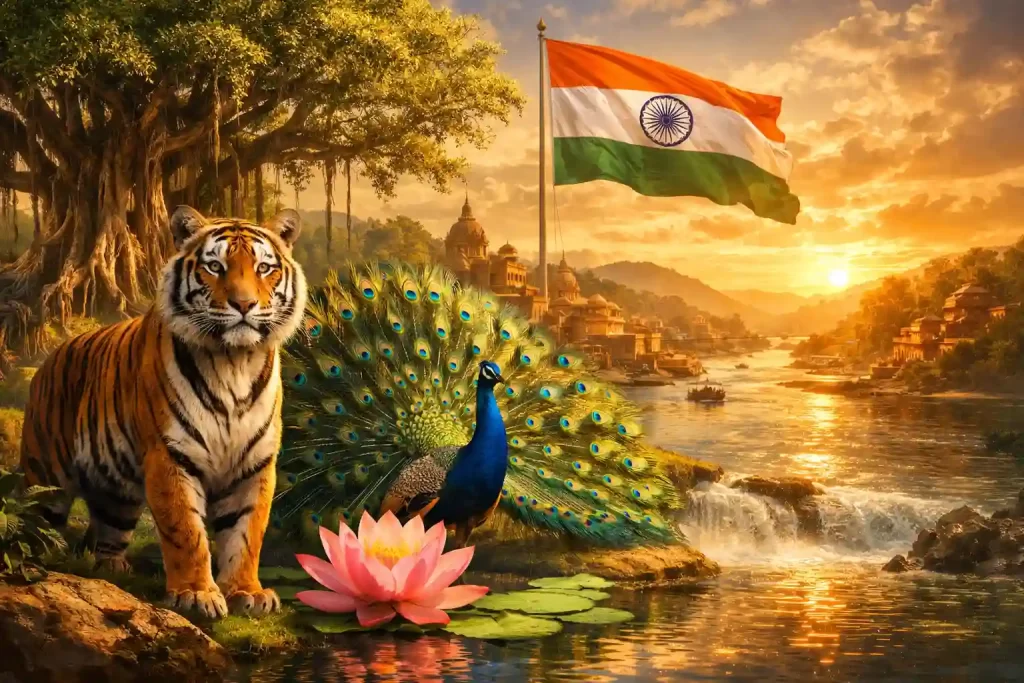
India is one of the oldest civilizations in the world, with a history that stretches back thousands of years. Over time, the country has developed powerful symbols that represent its identity, culture, values, and natural heritage. These symbols are known as the national icons of India. They are carefully chosen representations of what the nation stands for and what it wishes to preserve for future generations.
From the majestic Bengal tiger roaming dense forests to the sacred Ganga River flowing through the heart of the country, these icons tell the story of India’s strength, spirituality, and diversity. They appear in textbooks, government buildings, passports, currency notes, and even international events. But beyond their official status, they hold deep emotional and cultural meaning for millions of people.
What Is the National Icon of India?
A National Icon of India is a symbol officially adopted by a country to represent its culture, traditions, values, and identity. These icons may include animals, birds, plants, monuments, emblems, or natural features that hold special significance.
Countries around the world have national icons that represent their unique heritage. For example, the bald eagle represents the United States, while the maple leaf symbolizes Canada. Similarly, India has chosen several powerful symbols that reflect its cultural depth and natural beauty.
National icons serve several important purposes:
- They represent the nation internationally.
- They help educate citizens about cultural heritage.
- They promote unity among people from different regions.
- They inspire conservation of wildlife and natural resources.
In India, these symbols are taught in schools from an early age so that children grow up understanding the values and traditions of their country.
The National Emblem of India
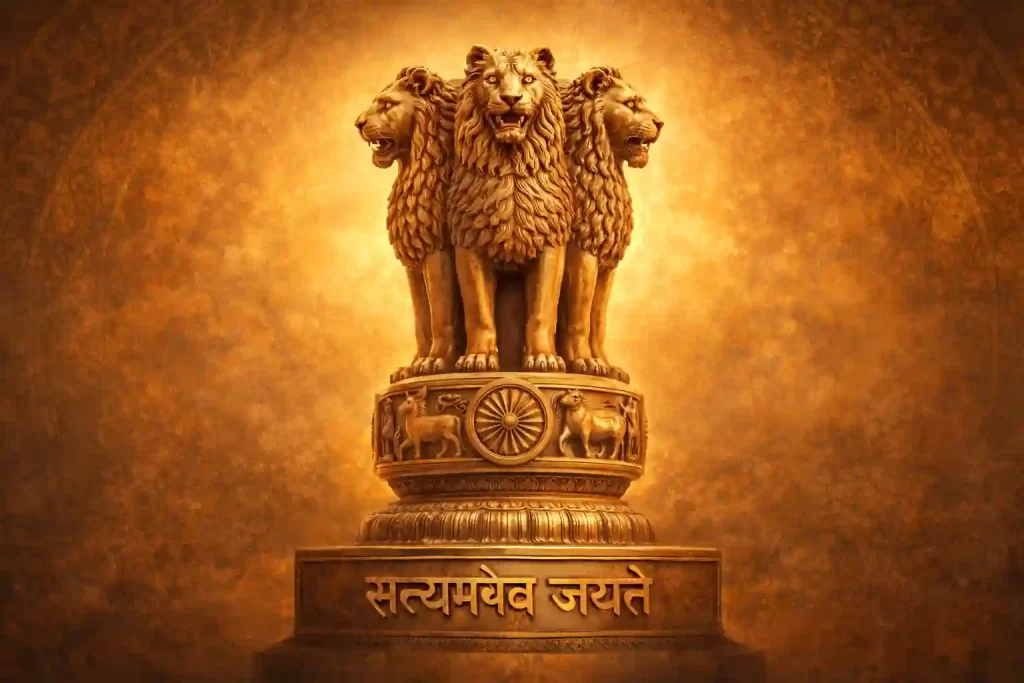
One of the most recognized national icons of India is the National Emblem, which is derived from the Lion Capital of Ashoka at Sarnath.
The emblem features four Asiatic lions standing back-to-back, symbolizing power, courage, pride, and confidence. Three lions are visible from the front while the fourth remains hidden at the back. These lions rest on a circular base that contains carvings of animals including a horse, bull, lion, and elephant separated by Ashoka Chakras.
Below the emblem appears the famous motto “Satyameva Jayate”, which translates to Truth Alone Triumphs. This phrase comes from the ancient Indian scripture Mundaka Upanishad, emphasizing the importance of truth and righteousness.
The National Emblem was adopted by the Government of India on 26 January 1950, the day India became a republic.
Today, the emblem appears on:
- Indian currency notes and coins
- Government documents
- Official seals and letterheads
- Passports
- Court buildings and Parliament
Whenever people see the emblem, it reminds them of the authority and values of the Indian republic.
The National Animal of India – Bengal Tiger
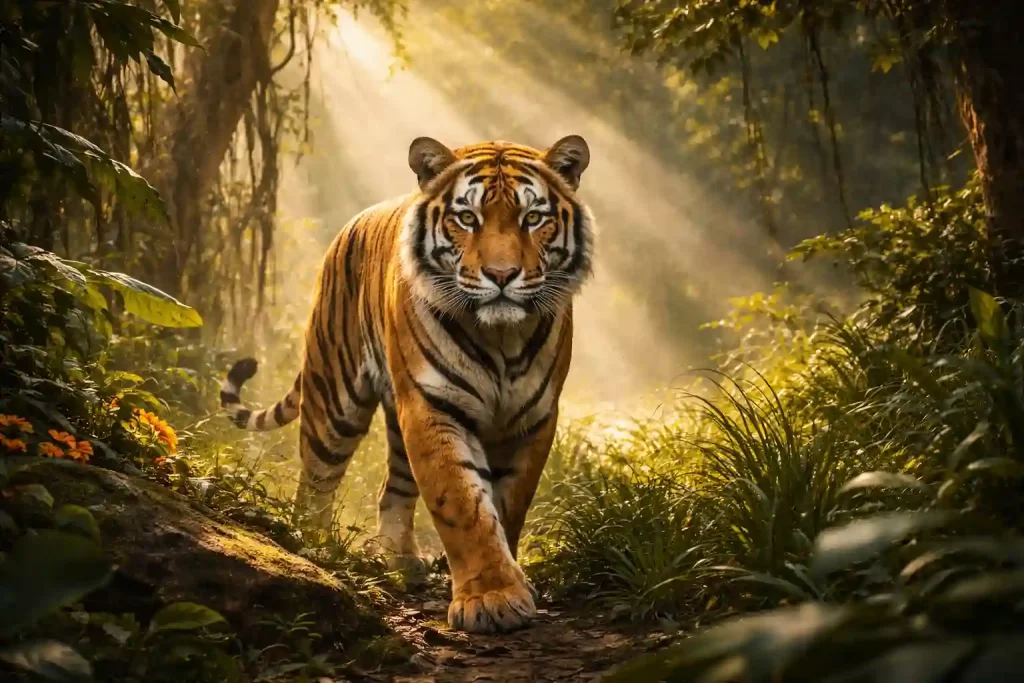
The Bengal Tiger is the national animal of India and one of the most powerful wildlife symbols in the world. Known scientifically as Panthera tigris tigris, this majestic predator represents strength, courage, agility, and power.
India declared the Bengal tiger as its national animal in 1973, replacing the Asiatic lion. This decision was made partly to highlight the importance of protecting this magnificent species, whose population had been declining rapidly due to hunting and habitat loss.
To protect the tiger, the government launched Project Tiger, one of the largest wildlife conservation programs in the world. Today, India is home to approximately 70 percent of the global wild tiger population, making it a critical country for tiger conservation.
Tigers are found in many Indian national parks and wildlife reserves, including:
- Jim Corbett National Park
- Ranthambore National Park
- Bandhavgarh National Park
- Sundarbans National Park
The tiger symbolizes India’s wild spirit and its commitment to protecting nature.
The National Bird of India – Indian Peafowl
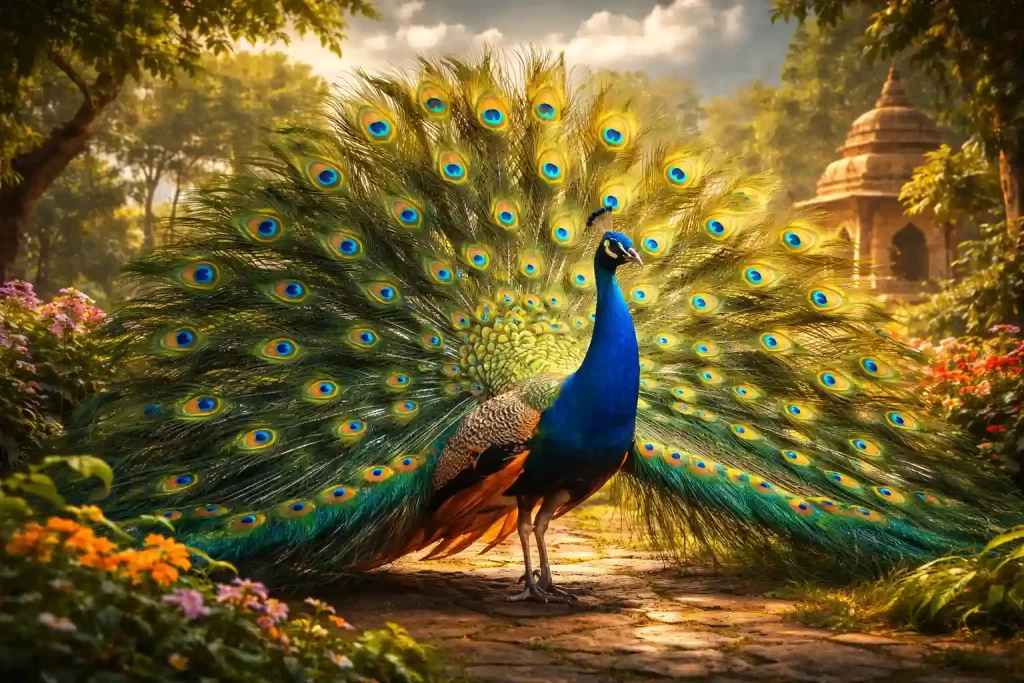
The Indian Peafowl, commonly called the peacock, is another beautiful national symbol. It was declared the national bird of India in 1963.
Peacocks are famous for their vibrant blue and green feathers and their spectacular display during the monsoon season. When the male peacock spreads its feathers into a fan-shaped pattern, it creates one of the most stunning sights in nature.
The peacock was chosen as the national bird because it represents:
- Beauty and grace
- Pride and dignity
- Cultural importance in Indian traditions
Peacocks appear frequently in Indian mythology, art, and literature. In Hindu mythology, the peacock is associated with Lord Krishna, who is often depicted wearing a peacock feather in his crown. The bird is also connected to Lord Kartikeya, the god of war.
Peacocks are widely found across India, especially in forests, villages, and temple areas. Their presence in both rural and urban environments makes them a familiar and beloved bird.
The National Flower – Lotus

The lotus is the national flower of India and holds deep spiritual meaning in Indian culture. This beautiful aquatic flower grows in muddy water yet blooms clean and bright above the surface. Because of this unique quality, the lotus symbolizes purity, enlightenment, and spiritual awakening.
The lotus has been an important symbol in India for thousands of years. It appears in ancient scriptures, temple carvings, paintings, and religious ceremonies.
In both Hinduism and Buddhism, the lotus represents divine beauty and spiritual growth. Many deities, including Goddess Lakshmi and Lord Brahma, are shown sitting on a lotus flower.
The flower’s ability to remain pure despite growing in muddy water is often used as a metaphor for living a virtuous life in a complicated world. Because of these powerful meanings, the lotus was chosen as the national flower of India.
The National Tree – Banyan Tree
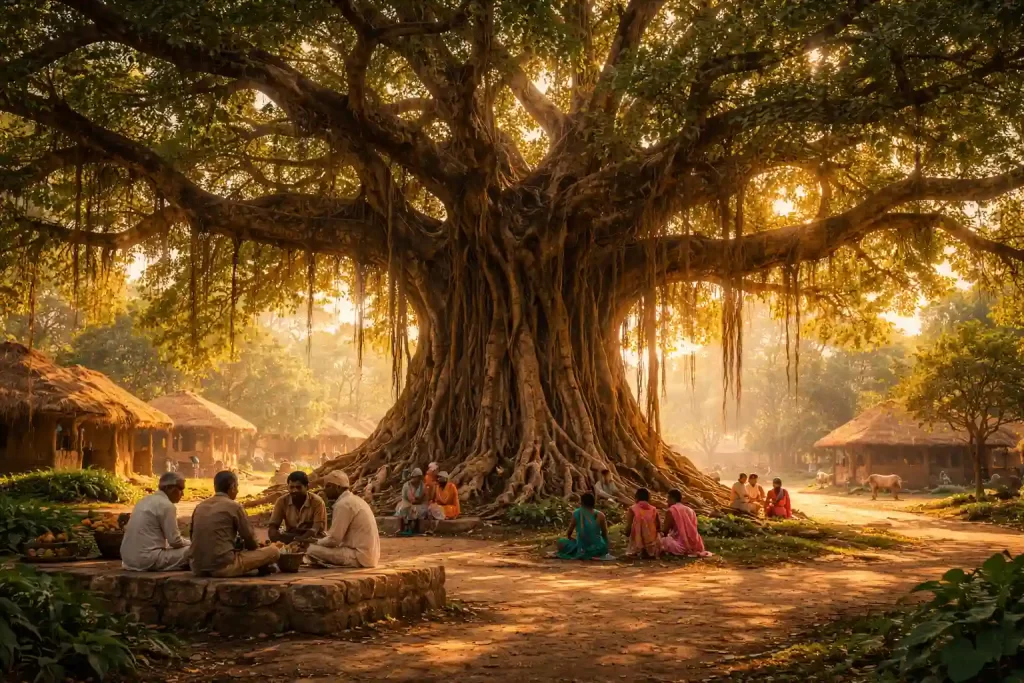
The banyan tree is the national tree of India and symbolizes longevity, strength, and unity.
This massive tree is known for its unique growth pattern. Its branches extend outward and produce aerial roots that eventually grow into new trunks. Over time, a single banyan tree can cover a huge area and appear like a small forest. Because of its long lifespan and expanding structure, the banyan tree represents immortality and continuity.
Historically, banyan trees served as important meeting places in Indian villages. People gathered under their shade to hold community discussions, resolve disputes, and share stories. Even today, many rural communities continue to use banyan trees as social gathering spots.
One of the most famous banyan trees in India is the Great Banyan Tree located in the Acharya Jagadish Chandra Bose Botanical Garden in Kolkata. It is more than 250 years old and spreads across several acres.
The National Fruit – Mango
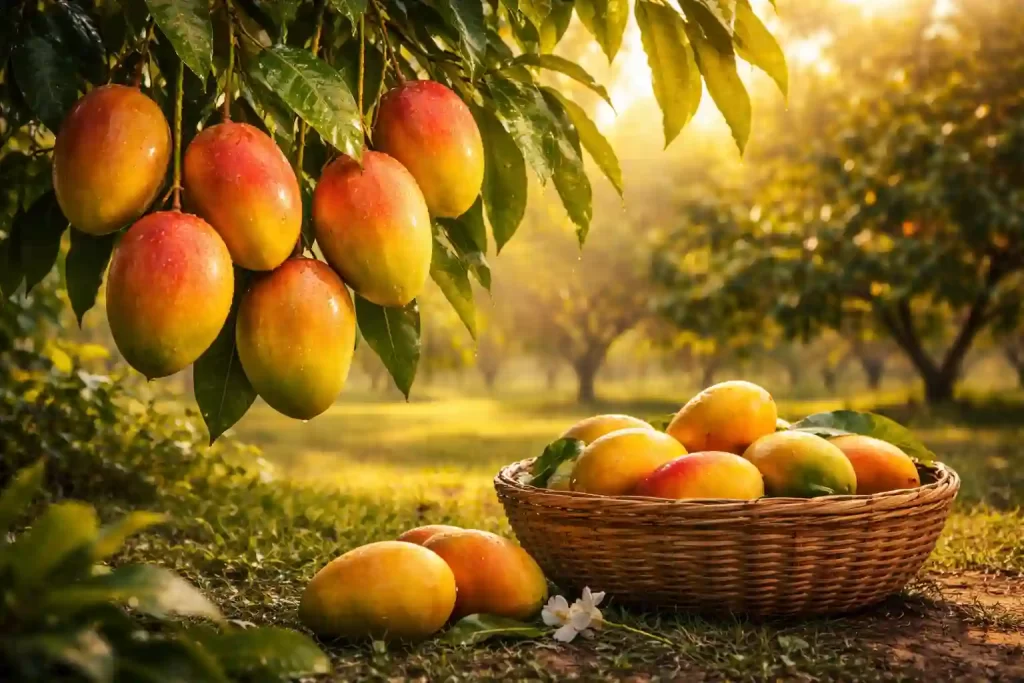
The mango is India’s national fruit and one of the most beloved fruits in the country. India is the world’s largest producer of mangoes, with hundreds of different varieties grown across the nation. Some famous varieties include:
- Alphonso
- Kesar
- Dasheri
- Langra
- Banganapalli
Mangoes have been cultivated in India for more than 4,000 years and are deeply connected to Indian culture and traditions. In many parts of India, mango leaves are used in decorations during festivals and weddings because they symbolize prosperity and good fortune.
Ancient poets and writers also praised the mango in literature, often describing it as the “king of fruits.” Today, mangoes are enjoyed fresh, in juices, desserts, pickles, and traditional sweets.
The National River – Ganga

The Ganga River is the national river of India and one of the most sacred rivers in the world.
Stretching over 2,500 kilometers, the river originates from the Himalayas and flows through several Indian states before emptying into the Bay of Bengal. The Ganga is not only a geographical feature but also a deeply spiritual symbol. Millions of people consider it a sacred river capable of purifying the soul.
Major cities located along the Ganga include:
- Varanasi
- Haridwar
- Prayagraj
- Kanpur
- Patna
The river supports agriculture, drinking water supply, transportation, and livelihoods for millions of people.
Because of its cultural, economic, and spiritual importance, the Ganga was declared the national river of India in 2008.
The National Flag – Tiranga
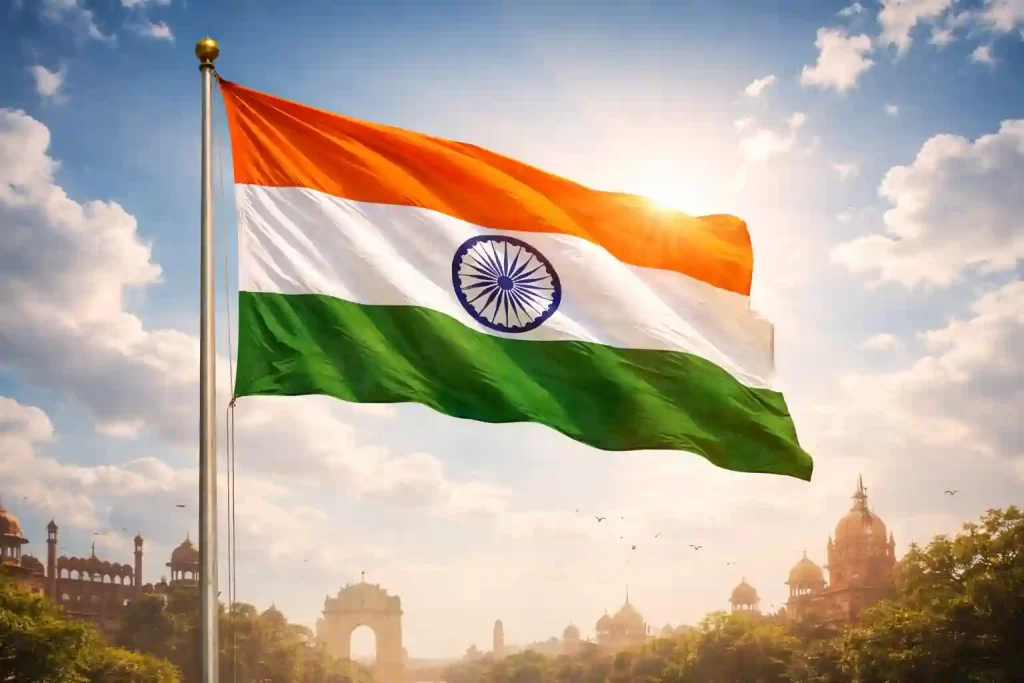
The Indian national flag, popularly known as the Tiranga, is one of the most powerful national icons.
The flag consists of three horizontal stripes:
Saffron (top) – Represents courage, sacrifice, and the spirit of renunciation.
White (middle) – Symbolizes peace, truth, and honesty.
Green (bottom) – Represents growth, prosperity, and fertility of the land.
At the center of the white stripe is the Ashoka Chakra, a navy blue wheel with 24 spokes. The wheel represents progress, justice, and continuous movement toward a better future. The current design of the flag was adopted on 22 July 1947, just weeks before India gained independence from British rule.
The Tiranga is flown on government buildings, schools, and homes during national celebrations such as:
- Independence Day
- Republic Day
- Gandhi Jayanti
For many Indians, the national flag represents freedom, sacrifice, and unity.
The National Anthem – Jana Gana Mana

Another important national symbol is the national anthem, Jana Gana Mana. It was written by the famous poet Rabindranath Tagore.
The anthem was officially adopted in 1950 and is sung during national ceremonies, school assemblies, and international events where India is represented. The song celebrates the diversity and unity of India, describing the vast regions and cultures that together form the nation.
Whenever the anthem is played, people stand as a sign of respect and national pride.
Why National Icons Are Important
National icons play a powerful role in shaping the identity of a country. They help people connect with their heritage and remind them of the values that define their nation. In India, where hundreds of languages and cultures coexist, national symbols create a shared sense of belonging.
These icons also encourage conservation. For example, declaring the tiger as the national animal helped bring attention to wildlife protection efforts. Similarly, the recognition of the Ganga as the national river has increased awareness about river conservation and pollution control.
By learning about these symbols, citizens gain a deeper appreciation of the country’s natural and cultural heritage.
Conclusion
The national icons of India represent the spirit, history, and natural beauty of the nation. From the majestic Bengal tiger and colorful peacock to the sacred lotus and powerful Tiranga, each symbol tells a story about what India values and wishes to protect.
These icons are more than official emblems. They are reminders of the country’s ancient traditions, struggles for freedom, and the unity that binds over a billion people together.
Understanding these national symbols helps us appreciate India not just as a modern nation but as a civilization with deep roots and timeless values. As generations pass, these icons will continue to inspire pride, respect, and a sense of belonging among Indians everywhere.

Leave a Reply