What Is the National Animal of India?
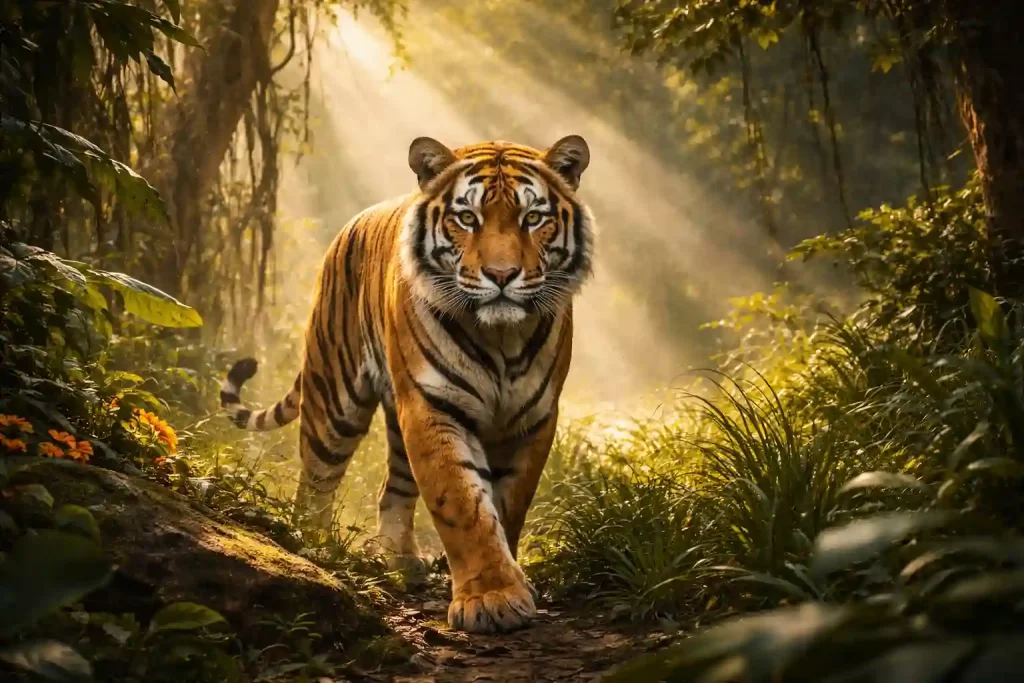
The national animal of India is the Bengal tiger. Powerful, graceful, and mysterious, this big cat has fascinated people for centuries. It represents strength, courage, and the wild spirit of India. But the story behind this choice is far more interesting than most people realize.
India officially declared the Bengal tiger (Panthera tigris tigris) as its national animal in 1973. The decision was closely linked with growing concern about tiger populations declining rapidly due to hunting and habitat loss. At the same time, the government launched Project Tiger, one of the most ambitious wildlife conservation programs ever created.
But here’s the surprising part… decades ago, tigers in India were dangerously close to disappearing. What scientists and conservationists discovered next changed everything.
Today, India is home to over 70 percent of the world’s wild tiger population. And the Bengal tiger remains one of the most powerful symbols of the nation.
Why the Bengal Tiger Is the National Animal of India
The Bengal tiger was chosen as the national animal of India because it represents power, agility, courage, and natural beauty.
India’s wildlife is incredibly diverse, yet the tiger stands apart. It is the top predator in its ecosystem and plays a crucial role in maintaining ecological balance.
The tiger also holds a special place in Indian culture, mythology, and art. In many traditional stories and paintings, tigers symbolize bravery and royal authority.
When India needed a national animal that reflected the country’s strength and biodiversity, the Bengal tiger became the obvious choice.
Scientific Classification of the Bengal Tiger
| Feature | Information |
|---|---|
| Scientific Name | Panthera tigris tigris |
| Common Name | Bengal Tiger |
| Conservation Status | Endangered |
| Average Weight | 100–300 kg |
| Length | Up to 3 meters including tail |
| Lifespan | 10–15 years in the wild |
| Habitat | Forests, mangroves, grasslands |
| Diet | Carnivore (deer, wild boar, buffalo) |
The Bengal tiger is one of the largest tiger subspecies in the world.
Its orange coat with black stripes acts as camouflage in forests and tall grass. Each tiger’s stripe pattern is unique, almost like a fingerprint.
Habitat of the National Animal of India
The national animal of India lives in a variety of habitats across the country.
These include:
- Tropical rainforests
- Grasslands
- Mangrove forests
- Deciduous forests
- Himalayan foothills
One of the most famous tiger habitats is the Sundarbans mangrove forest, shared between India and Bangladesh.
The Sundarbans tigers are known for their ability to swim long distances between islands. This behavior makes them unique among big cats.
Other well-known tiger reserves include:
- Jim Corbett National Park
- Ranthambore National Park
- Bandhavgarh National Park
- Kanha National Park
Each reserve plays an important role in protecting the national animal of India.
Comparison: Bengal Tiger vs Asiatic Lion
Before the Bengal tiger became the national animal, India once considered the Asiatic lion.
Here’s a comparison.
| Feature | Bengal Tiger | Asiatic Lion |
|---|---|---|
| Habitat | Forests and mangroves | Mostly Gir Forest |
| Population | Several thousand | Around 700 |
| Distribution | Across India | Mostly Gujarat |
| National Status | National animal | State animal of Gujarat |
The tiger was chosen because it represents India’s wider ecological landscape.
Did You Know?
- The Royal Bengal tiger can leap more than 10 meters in a single jump.
- It can also swim extremely well and often crosses rivers while hunting.
- Some tigers in the Sundarbans have even been recorded swimming between islands several kilometers apart.
The Role of Project Tiger
By the early 1970s, tiger numbers had fallen dramatically due to hunting and habitat destruction.
To save the national animal of India, the government launched Project Tiger in 1973.
The program focused on:
- Creating protected tiger reserves
- Stopping poaching
- Restoring natural habitats
- Monitoring tiger populations using modern technology
The results were remarkable. India now has more than 3,000 wild tigers, according to the All India Tiger Estimation Report. This represents one of the most successful wildlife conservation efforts in the world.
Cultural Importance of the Bengal Tiger
The national animal of India appears in many cultural traditions. In Hindu mythology, the goddess Durga is often depicted riding a tiger. This symbolizes divine power and protection.
Ancient kings also used tiger imagery to represent royal strength. Even today, the tiger remains a powerful symbol in Indian sports teams, logos, and literature. It represents courage, determination, and resilience.
Fun Facts About the National Animal of India
- A tiger’s roar can be heard up to 3 kilometers away.
- Each tiger has a unique stripe pattern.
- Tigers prefer hunting alone rather than in groups.
- They are excellent swimmers and enjoy water.
- A tiger can eat up to 40 kg of meat in one meal.
These facts highlight why the Bengal tiger is one of the most fascinating predators in the wild.
A Quote About Protecting Wildlife
Naturalist Sir David Attenborough once said:
“No one will protect what they don’t care about; and no one will care about what they have never experienced.”
This idea perfectly captures the importance of protecting the national animal of India. When people understand the beauty and role of the tiger, they become more motivated to protect it.
Threats Facing the National Animal of India
Despite conservation success, tigers still face several challenges.
Major threats include:
- Habitat loss due to deforestation
- Human-wildlife conflict
- Illegal wildlife trade
- Climate change affecting habitats
But conservationists continue working to protect tiger populations and their ecosystems.
Technology like camera traps, satellite tracking, and AI-based monitoring now helps scientists track tiger numbers more accurately.
Suggested Video
The Secret Life of Bengal Tigers | National Geographic
Frequently Asked Questions
What is the national animal of India?
The Bengal tiger (Panthera tigris tigris) is the national animal of India.
When was the Bengal tiger declared the national animal?
It was declared the national animal in 1973 when India launched Project Tiger.
Why was the tiger chosen as the national animal?
The tiger represents strength, courage, and ecological importance in India’s forests.
Where are Bengal tigers found in India?
They live in forests, grasslands, mangroves, and national parks such as Ranthambore, Corbett, and Sundarbans.
How many tigers are left in India?
India currently has over 3,000 wild tigers, the largest population in the world.
What is Project Tiger?
Project Tiger is a conservation program started in 1973 to protect tiger habitats and increase tiger populations.
References
National Tiger Conservation Authority
https://ntca.gov.in
https://www.indianembassyzagreb.gov.in/page/national-symbols
Final Thoughts
The national animal of India, the Bengal tiger, is more than just a powerful predator. It represents the wild heart of the country. Every roar echoing through India’s forests reminds us that nature is still alive and thriving.
And protecting this magnificent animal means protecting the forests, rivers, and ecosystems that sustain life for millions. In many ways, the future of the tiger and the future of the forest are the same story.

Leave a Reply