What Is the National Emblem of India?
The National Emblem of India is the official symbol that represents the authority, strength, and values of the Republic of India. You see it on Indian currency, passports, government buildings, and even courtrooms. But behind this powerful image lies a fascinating story that goes back more than two thousand years.
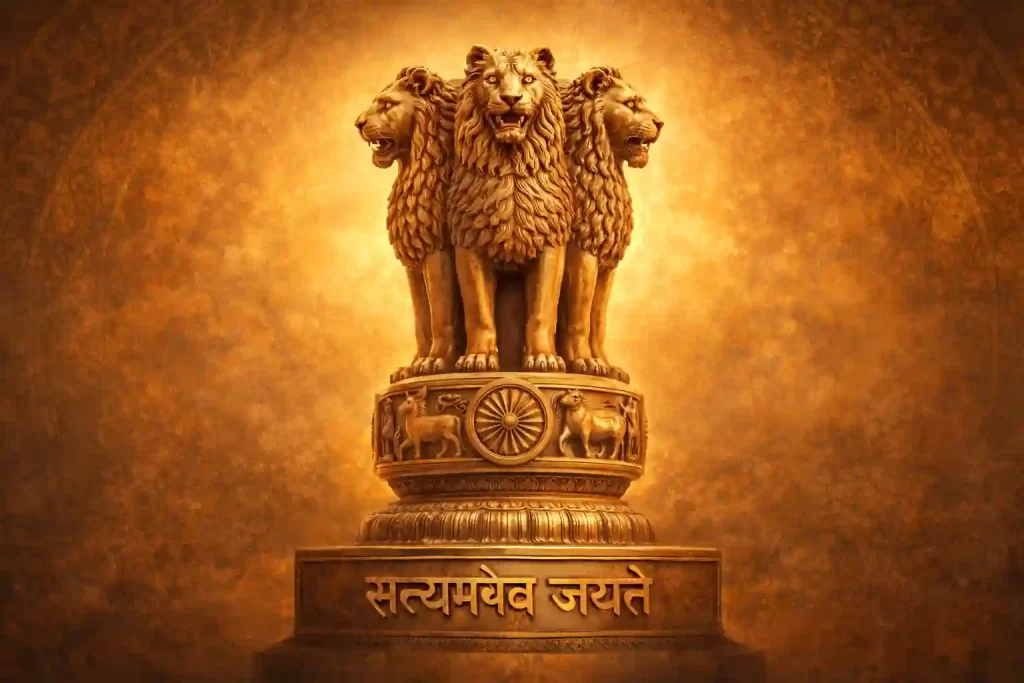
At first glance, the emblem looks simple—four lions standing proudly on a circular base. Yet every part of it carries deep meaning. The lions represent power and courage. The wheel below them symbolizes law and movement. And beneath everything sits a phrase that defines India’s moral foundation: “Satyameva Jayate” — Truth Alone Triumphs.
But here’s the surprising part: this emblem was not originally created for modern India. Its roots go back to the ancient Mauryan Empire and a ruler who changed the course of Indian history.
The Ancient Origin of the National Emblem
The National Emblem of India is based on the Lion Capital of Ashoka, a sculpture created during the reign of Emperor Ashoka in the 3rd century BCE.
Ashoka was one of the greatest rulers of ancient India. After witnessing the horrors of war, he adopted the philosophy of peace and moral governance. To spread his message, he built pillars across his empire with inscriptions promoting justice, compassion, and truth.
One of these pillars was erected in Sarnath, near present-day Varanasi. On top of the pillar stood a magnificent sculpture—four lions facing the four directions of the world.
Centuries later, when India gained independence, leaders searched for a symbol that represented both strength and moral values. The Lion Capital of Ashoka perfectly captured that spirit.
So on 26 January 1950, the day India became a republic, the Lion Capital was officially adopted as the National Emblem of India.
Design and Structure of the National Emblem
The National Emblem of India is rich with symbolic elements, each representing important national values.
At the top are four Asiatic lions, standing back-to-back. From the front view, only three lions are visible, while the fourth remains hidden.
These lions symbolize:
- Power
- Pride
- Courage
- Confidence
Below the lions is a circular platform known as the abacus. It contains carvings of four animals separated by Ashoka Chakras.
The animals are:
- Lion
- Bull
- Horse
- Elephant
Each animal represents a direction and movement, symbolizing the spread of truth and justice across the world.
Beneath this platform lies the motto “Satyameva Jayate.”
Meaning Behind “Satyameva Jayate”
The phrase Satyameva Jayate comes from the Mundaka Upanishad, an ancient Indian scripture.
It means “Truth Alone Triumphs.”
This motto reflects the moral foundation of India’s democracy. It reminds citizens and leaders that truth, honesty, and justice should guide every action.
The phrase appears in the Devanagari script beneath the emblem and has become one of the most powerful expressions of Indian philosophy.
Elements of the National Emblem and Their Symbolism
| Element | Meaning |
|---|---|
| Four Lions | Power, courage, pride, authority |
| Ashoka Chakra | Law, motion, and righteousness |
| Elephant | Strength and wisdom |
| Horse | Energy and speed |
| Bull | Hard work and stability |
| Lion | Leadership and courage |
| Satyameva Jayate | Truth always prevails |
Every detail in the National Emblem of India was carefully chosen to represent values that guide the nation.
Where the National Emblem Is Used
The National Emblem of India appears on many official items and documents. It acts as a mark of authority and authenticity.
You can find it on:
- Indian passports
- Currency notes and coins
- Government documents
- Supreme Court and High Court buildings
- Official seals of ministries
- National identity documents
Whenever you see this emblem, it represents the authority of the Government of India.
Comparison: Original Lion Capital vs Modern National Emblem
| Feature | Lion Capital of Ashoka | National Emblem of India |
|---|---|---|
| Created | 3rd century BCE | Adopted in 1950 |
| Location | Sarnath | Used nationwide |
| Animals visible | Four lions and full animal carvings | Three lions visible from front |
| Motto | Not originally included | Includes “Satyameva Jayate” |
| Purpose | Ashoka’s pillar symbol | Official government emblem |
This adaptation allowed India to preserve ancient heritage while giving it a modern national meaning.
Did You Know?
The original Lion Capital of Ashoka is preserved in the Sarnath Archaeological Museum in Uttar Pradesh.
It is made from polished sandstone and stands about 2.1 meters tall.
The sculpture is considered one of the finest examples of ancient Indian art and craftsmanship.
Historical Significance of the Emblem
The National Emblem of India connects modern India to its ancient past.
It reminds citizens that the values of justice, truth, and compassion are not new ideas—they have guided Indian civilization for thousands of years.
When India became independent in 1947, leaders wanted symbols that represented unity and cultural continuity. The Lion Capital was chosen because it reflected both strength and ethical leadership.
As Jawaharlal Nehru once said:
“The service of India means the service of the millions who suffer.”
This idea of moral responsibility aligns closely with the philosophy represented in the national emblem.
Fun Facts About the National Emblem of India
- The original Lion Capital was discovered during archaeological excavations in 1905.
- The emblem is protected by law under the State Emblem of India Act, 2005.
- Unauthorized use of the emblem is illegal.
- The Ashoka Chakra in the national flag also comes from Ashoka’s pillars.
- Only certain government authorities can officially use the emblem.
Why the National Emblem Still Matters Today
Symbols shape how nations see themselves. The National Emblem of India reminds people that strength must always be balanced with truth and justice.
It stands at the entrance of courts, reminding judges of fairness. It appears on currency, symbolizing trust in the nation’s economy. And it rests on official documents, representing the authority of the republic.
In many ways, it serves as a silent guardian of India’s ideals.
A Quote That Reflects Its Spirit
Mahatma Gandhi once said:
“Truth never damages a cause that is just.”
This idea perfectly echoes the motto Satyameva Jayate, the heart of the National Emblem of India.
Frequently Asked Questions
What is the National Emblem of India?
The National Emblem of India is the official symbol of the Republic of India, derived from the Lion Capital of Ashoka at Sarnath.
When was the National Emblem adopted?
It was officially adopted on 26 January 1950, when India became a republic.
What does the four lions symbolize?
The four lions represent power, courage, pride, and confidence.
What does Satyameva Jayate mean?
“Satyameva Jayate” means Truth Alone Triumphs, a phrase from the Mundaka Upanishad.
Where is the original Lion Capital located?
The original sculpture is preserved in the Sarnath Archaeological Museum in Uttar Pradesh.
References
Archaeological Survey of India
https://asi.nic.in
National Portal of India
https://www.indianembassyzagreb.gov.in/page/national-symbols/
Final Thoughts
The National Emblem of India is more than just a government symbol. It is a bridge between ancient wisdom and modern democracy.
Every time someone sees the four lions standing tall, they are reminded of the ideals that shaped the nation—truth, courage, justice, and unity.
And perhaps that is the true power of the emblem. It quietly reminds a billion people of who they are… and the values they must continue to protect.

Leave a Reply