India Tiger Safari:
Seeing a Wild Bengal Tiger
The complete honest 2026 guide for Americans — the best parks, your real sighting chances, exactly how to book permits, costs, what to wear, what the jungle actually feels like, and a 5-day itinerary that maximises your chances of seeing the world’s most magnificent wild animal.
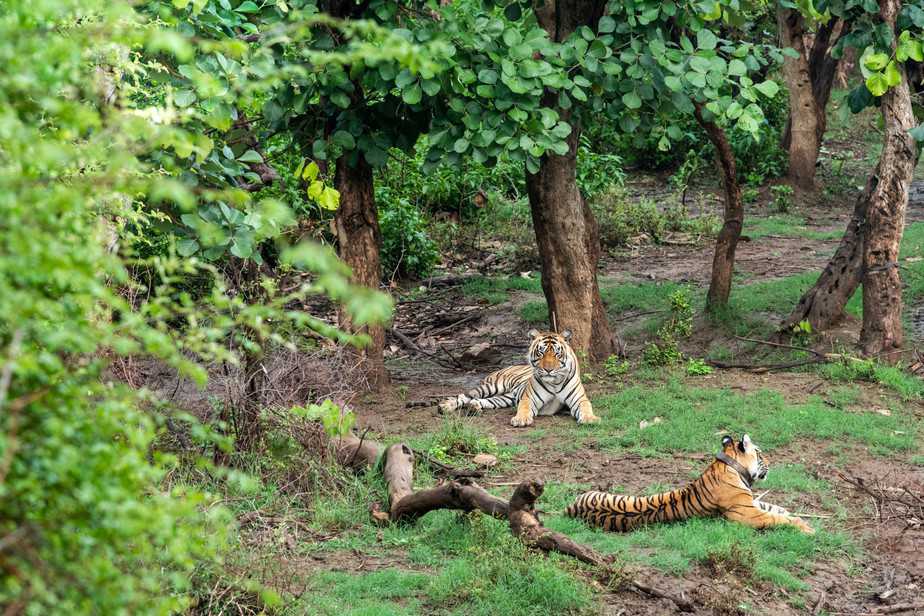
There is a moment in the Indian jungle — after hours of driving through sal forest and dry riverbeds, after following alarm calls and pug marks in the red dust — when a shape materialises between the trees that stops every thought in your head.
A Royal Bengal tiger, full-grown, pausing in a shaft of morning light, looking at your jeep with an expression of magnificent indifference. In that moment, every cliché you’ve ever heard about the power of wildlife, about nature’s scale, about feeling small in the right way — all of it becomes suddenly, undeniably true.
India has more wild tigers than any country on Earth. With 3,730+ tigers across 58 tiger reserves — a number that has more than doubled over the last 15 years thanks to one of conservation’s great success stories — India offers the world’s best chance of seeing a Bengal tiger in its natural habitat. Better than Africa for tigers. Better than anywhere. And the infrastructure for Western visitors has never been better.
For Americans, a tiger safari in India is one of the most searched and most underserved travel queries on the internet. Most available guides are either thin or written for the Indian domestic market. This one is written specifically for you — with honest sighting statistics, detailed park comparisons, step-by-step booking instructions, exact costs in US dollars, and everything else you actually need to make this happen.
“India now has more wild tigers than it has had at any point since independence. For anyone who wants to see the world’s most iconic wild animal in its natural habitat — there is no better place, and no better time.”
— Mumbai7.com Wildlife Desk, 2026April–June (peak summer) gives highest tiger sighting rates as tigers come to water sources. Nov–Feb offers comfortable temperatures with excellent sightings. Most parks close July–September for monsoon.
Why India Is the World’s Best Place to See a Wild Tiger
India is home to approximately 75% of the world’s entire wild tiger population. The country’s tiger population stood at just 1,411 in 2006 — a crisis point. Through Project Tiger and a series of strict conservation measures, that number has grown to over 3,730 by 2024. This is one of the great conservation success stories of the 21st century, and for wildlife travelers, it means something very practical: your chances of seeing a wild tiger in India in 2026 have never been higher.
Compare this to anywhere else in the world. Russia has approximately 400–500 Amur tigers but sightings are extraordinarily rare and safaris are not practically available. Southeast Asia’s tiger populations are tiny and critically endangered. India is, quite simply, the only place on Earth where a traveler can take a regular jeep safari and have a genuinely strong probability of seeing a Bengal tiger in its natural habitat.
What Makes an Indian Tiger Safari Different from an African Safari
Americans who have done safaris in Kenya or Tanzania often ask: how does India compare? The answer is — it’s completely different, and extraordinary in its own way:
- Dense jungle vs open savannah: Indian tigers live in dense forest. You hunt for them through thick sal and bamboo, following pug marks, listening for alarm calls from spotted deer and langur monkeys that signal a tiger is nearby. The drama of finding a tiger is part of the experience in a way that open-plain sightings are not.
- Closer encounters: Indian tigers are generally more accustomed to jeeps than African big cats. Sightings often mean a tiger walking along the road directly past your vehicle — sometimes within 5 metres.
- Stricter regulations: India limits vehicles to specific zones and time slots. This means fewer vehicles per sighting than you might encounter in some African parks, creating a more intimate experience.
- Additional wildlife: Indian tiger reserves also contain leopards, sloth bears, wild dogs (dholes), elephants, gaur (Indian bison — the world’s largest wild cattle), crocodiles, and extraordinary birdlife. A tiger safari in India is always a full wildlife experience, not just a tiger hunt.
The 6 Best Tiger Reserves in India — Compared for Americans
India has 58 tiger reserves. These are the six that consistently offer the best combination of sighting probability, accessibility from international airports, wildlife diversity, and lodge quality for Western visitors.
Bandhavgarh has the highest tiger density in the world — reportedly one tiger per 3 square kilometres in the core Tala zone. It is consistently the single best park in India for tiger sightings, with the famous “Charger” lineage of tigers that have been habituated to vehicles over generations. The ancient Bandhavgarh Fort ruins inside the forest add a dramatic archaeological dimension unlike any other Indian park.
Kanha is the park that inspired Rudyard Kipling’s The Jungle Book — and walking its meadows and sal forests, it is easy to understand why. It is larger and more diverse than Bandhavgarh, with open meadows (known locally as maidans) that create perfect conditions for tiger and leopard sightings. The Barasingha deer (swamp deer), saved from extinction here, are found nowhere else on Earth in this density. Excellent wildlife photography park.
Ranthambore is the most accessible major tiger reserve from Delhi (4.5 hours by train), making it the most popular choice for Americans adding a safari to a Rajasthan or Golden Triangle trip. The park’s dramatic backdrop — the 10th-century Ranthambore Fort rising above the forest — is unique. The tigers here are famously photogenic. Sighting rates are slightly lower than Bandhavgarh but still excellent, and the UNESCO fort adds heritage value.
India’s oldest national park (1936), named after the famous hunter-turned-conservationist Jim Corbett. Set in the Himalayan foothills with the Ramganga River running through it, Corbett has a distinctive beauty and atmosphere unlike the Central Indian parks. Home to 600 elephants, tigers, leopards, and extraordinary birdlife. The Dhikala forest rest house (book 90 days ahead) offers an overnight jungle experience unavailable anywhere else in India.
Tadoba has emerged in the last decade as one of India’s most exciting tiger reserves — raw, less polished, and with a reputation for dramatic, high-energy sightings. Its teak forests and dry terrain make tigers more visible than in denser parks. The reserve is also known for cubs — tigresses with young cubs are regularly spotted, creating extraordinary family viewing. Nagpur is 2 hours away by road. Open most of the year including parts of the monsoon.
Pench spans two states and is the second Jungle Book inspiration park — this is where Kipling’s Mowgli story is set in the teak forest along the Pench River. Slightly lower tiger density than Bandhavgarh or Kanha, but compensated by extraordinary scenery, excellent wild dog sightings, and some of India’s finest jungle lodges. Often recommended as the second park in a Bandhavgarh + Pench combination itinerary.
What Are Your Real Chances of Seeing a Tiger?
This is the question every American asks before booking, and it deserves a direct, honest answer. The sighting rates below are based on multiple safaris per day over a minimum 3-day visit, in core zones during the optimal season.
💡 The honest truth about sighting rates: These percentages apply when you book 3–4 safaris over 2–3 days in core zones with a skilled local naturalist. A single safari in a buffer zone with a basic guide gives you much lower odds. The three variables that most determine sighting success are: (1) which zone you’re in, (2) how skilled your naturalist guide is, and (3) how many safaris you do. Never book just one safari and expect to see a tiger.
The Best and Worst Times for Sightings
- April–June (peak season, very hot — 38–44°C): Highest sighting rates because dry weather forces tigers to water holes. Vegetation is sparse so visibility is maximum. The heat is challenging but manageable in the early morning and evening safaris. This is when the serious wildlife photographers go.
- November–February (comfortable season): Excellent sighting rates with pleasant weather. The forest is thicker after the monsoon so sightings require more tracking. Still excellent probability in good zones.
- October: Parks reopen after monsoon. Forest is lush and green, tigers are active, fewer crowds. Good sighting opportunities, lower accommodation prices.
- July–September: Most core zones are closed during monsoon. Do not plan a tiger safari for these months.
How to Book an India Tiger Safari — Exactly
For Americans, the booking process has several moving parts and requires advance planning. Here is the exact process, step by step.
Step 1: Choose Your Park and Dates
For first-timers from the US, the best combination is Bandhavgarh + Kanha (both in Madhya Pradesh, ~3 hours apart by road, access via Jabalpur or Nagpur airport). For Americans adding wildlife to a Rajasthan trip, Ranthambore is the obvious choice. Allow minimum 2 nights / 4 safaris per park for reasonable sighting probability.
Step 2: Book Your Jungle Lodge
Book your lodge first — before trying to book safari permits directly. The best jungle lodges (Taj Banjaar Tola, Kings Lodge, Samode Safari Lodge, Singinawa) often have arrangements with local naturalists and can assist with permit procurement. A premium lodge booking effectively solves 80% of the logistical complexity.
🏡 Best lodges for Americans at Bandhavgarh: Taj Banjaar Tola ($350–500/night), Kings Lodge ($200–350/night), Samode Safari Lodge ($150–250/night). All include safari vehicles and naturalist guides. The difference in tiger sighting probability between a premium lodge with an expert naturalist and a budget option is significant — this is not the category to cut costs on.
Step 3: Safari Permits — How They Work
All Indian national parks require advance permits that are strictly limited by zone. Permits are issued by the respective state Forest Departments through their official websites. For most parks, the booking window opens 90–120 days ahead. Key points for American visitors:
- Ranthambore: Book at ranthambore.co.in or through a verified operator. Foreigners pay ~₹3,000 (~$35) per person per safari plus vehicle and guide fees.
- Bandhavgarh / Kanha: Permits via Madhya Pradesh government portal (mpforest.gov.in) or through your lodge. Your lodge will handle this if you request it at booking — strongly recommended.
- Jim Corbett: Uttarakhand Forest Department portal. The Dhikala zone requires booking 90 days ahead minimum.
Step 4: Use a Verified Wildlife Operator (Recommended)
For first-time American visitors, using a verified wildlife tour operator who handles permits, lodge bookings, transfers, and naturalist assignment is strongly recommended. Operators like Nature Safari India, Wild World India, and Jungle Lodges India specialize in Western visitors and handle all logistics for approximately $150–300/day per person all-inclusive. This significantly increases sighting rates through better zone selection and guide quality.
⚠️ Book permits 60–90 days ahead for winter and summer peak season. The best core zone slots at Bandhavgarh Tala zone and Ranthambore zones 2–5 sell out within days of the booking window opening. For December–February and April–May travel, mark your calendar and book the moment the window opens. A single zone allocation can make the difference between a high-probability and a low-probability safari.
The Perfect 5-Day India Tiger Safari Itinerary
This route is based at Bandhavgarh — India’s top tiger park — with an optional extension to Kanha. It can be bookended with Delhi at the start and Varanasi or Jaipur at the end for a complete India trip.
Wildlife You’ll See Beyond the Tiger
The finest India wildlife safaris always produce much more than a single species. These are the other extraordinary animals you can expect to encounter in Indian tiger reserves.
What Does an India Tiger Safari Cost for Americans?
All costs below are per person for a 5-day safari based at Bandhavgarh + Kanha, not including international flights to India or domestic flights within India.
| Category | Budget | Mid-Range | Luxury | Notes |
|---|---|---|---|---|
| Jungle Lodge (4 nights) | $80–120/night | $200–350/night | $400–600/night | All include meals and park transport. Mid-range recommended minimum for zone access. |
| Safari permits (4 safaris) | $30–40 | $60–100 | Included in premium lodge | Foreign tourist rate ~₹3,000 (~$35) per safari, varies by park |
| Naturalist guide | Included at lodge | Included at lodge | Expert specialist included | Do not skip this — a skilled naturalist doubles sighting probability |
| Transport between parks | $30–50 shared cab | $80–120 private | Included in package | Bandhavgarh to Kanha: ~3 hrs drive |
| Domestic flights (Delhi–Jabalpur–Delhi) | $80–120 | $120–200 | $200–400 | Book 6–8 weeks ahead for best fares |
| Total 5 Days Per Person | $550–750 | $1,200–2,000 | $2,500–5,000 | Excludes international flights. Mid-range gives best sighting probability vs cost. |
💡 The value case: A mid-range India tiger safari at $150–200/day per person delivers an experience comparable to African safari packages costing $500–1,000/day. India’s combination of wildlife quality, infrastructure, and cost makes it the world’s most accessible premium wildlife destination for American travelers.
What to Wear, Bring & Know Before the Jungle
Wear khaki, olive, brown, or beige — earth tones that don’t spook wildlife. Absolutely no white, bright colours, or high-visibility patterns. Bright clothing has been linked to tiger disturbance in park studies. Most lodges provide guidelines; follow them strictly. Long sleeves and long trousers always, for both mosquito and sun protection.
For tiger photography, you need a telephoto lens: 100–400mm is the minimum effective range; 500–600mm is ideal. A fast camera body (Sony A9, Canon R6, Nikon Z8 equivalent) handles the low-light forest conditions. If you don’t have a long lens, your lodge or local operators can often rent one. A monopod (not tripod) is ideal in a moving jeep.
The single most important safari rule: silence in the jeep once you enter the forest. Speak only in whispers. No music, phone calls, or notifications with sound. Tigers and other wildlife can hear human voices at considerable distance. Your naturalist will signal for silence before a sighting — practise before you enter.
Indian forest mornings (6–9 AM) can be 10–15°C cooler than afternoon temperatures. Bring a fleece layer for dawn safaris even if afternoon temperatures are warm. In summer (April–June), afternoon safaris can be 40°C+ — carry 2 litres of water per safari minimum.
Indian jungle reserves have mosquitoes and, in some parks, malaria risk. Consult a travel medicine doctor about malaria prophylaxis 6–8 weeks before departure. Use DEET 30%+ repellent on all exposed skin. Most quality jungle lodges have mosquito nets on beds; use them regardless of whether you feel you need to.
Tala zone (Bandhavgarh) and Zones 3–5 (Ranthambore) sell out within days of the booking window opening for peak season. For November–February and April–June travel, set a calendar reminder for 90 days before your arrival date. Your lodge can monitor and book the moment the window opens — use this service.
Never visit a tiger reserve for a single safari. Sighting probability compounds with multiple attempts. 4 safaris (2 dawn + 2 evening) over 2 days is the minimum for reliable probability. 6 safaris over 3 days gives you excellent odds at any top park. An afternoon without a sighting followed by a dawn with a tiger is one of the most satisfying wildlife experiences imaginable.
The experienced safari guests are the ones who watch the treeline and listen for alarm calls, not the ones scanning the road. Spotted deer, sambar, langur monkeys, and peacocks all have distinct alarm calls when a predator is nearby. Your naturalist will teach you these before the first safari. Once you can hear the forest, sighting probability increases dramatically.
Official Site for Tiger Reserve In INDIA

Leave a Reply