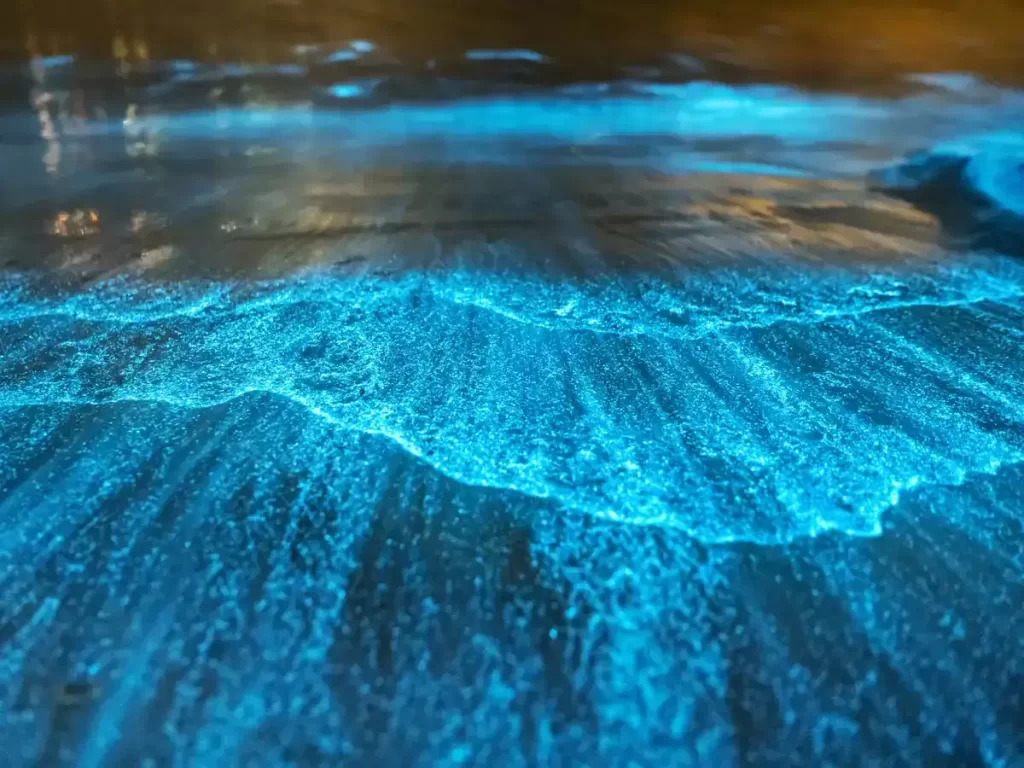
India has beaches that glow at night because of a rare, scientifically documented natural process called bioluminescence. Scientists across marine biology, chemistry, and environmental science fully understand how—and why—it happens.
First: What Does “Glowing Beach” Actually Mean?
A glowing beach does not mean sand is glowing on its own.
What you’re seeing is:
- Seawater lighting up when disturbed
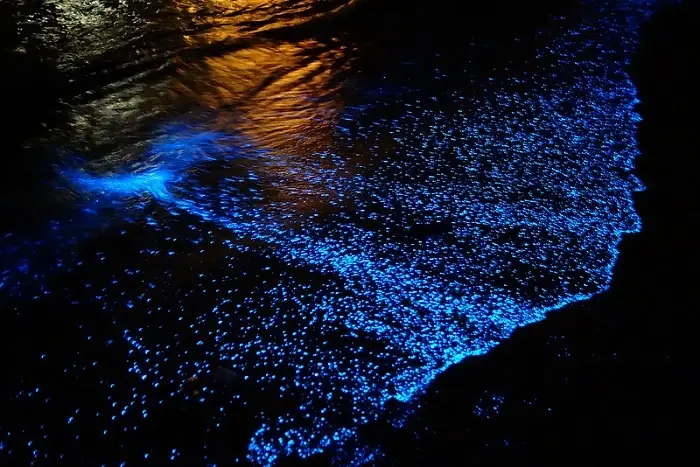
- Blue or turquoise flashes triggered by waves, footsteps, or splashes
This light is produced by living organisms, not reflection.
The Core Science: What Is Bioluminescence?
Bioluminescence (Simple Definition)
Bioluminescence is the ability of some living organisms to produce light through a chemical reaction inside their bodies.
It is:
- Cold light (no heat)
- Energy-efficient
- Used for defense and survival
Simple Science Diagram (Text Explanation)
Movement in water (waves / footsteps)
↓
Microscopic plankton disturbed
↓
Oxygen mixes with luciferin
↓
Luciferase enzyme triggers reaction
↓
Blue light released
This reaction happens in fractions of a second, which is why waves sparkle instantly.
Why the Light Is Always Blue (Not Red or Green)
Scientifically, blue light:
- Travels farthest in seawater
- Is least absorbed by water molecules
That’s why almost all marine bioluminescence appears blue or blue-green.
The Real Creators: Bioluminescent Plankton
The glow comes mainly from dinoflagellates, a type of microscopic plankton.
These organisms:
- Are invisible during the day
- Light up only when disturbed
- Exist naturally in oceans worldwide
They are not pollution, chemicals, or algae blooms.
Indian Beaches Where This Rare Glow Has Been Observed
1. Varkala Beach – Kerala
📍 Location
Thiruvananthapuram district, Kerala
India’s only cliff-side beach
Why It Glows
- Seasonal blooms of dinoflagellates
- Warm water temperatures
- Minimal industrial pollution
Best Time to See It
- Post-monsoon months (September–November)
- New moon nights (very dark skies)
Scientific Note
Wave motion near cliffs increases plankton disturbance, making the glow more visible.
2. Bangaram Island – Lakshadweep
📍 Location
Arabian Sea, Lakshadweep archipelago
Why It’s Special
- Extremely clear water
- Almost zero light pollution
- Healthy plankton ecosystem
Scientific Advantage
Clear water allows maximum visibility of emitted light, making the glow appear stronger and more widespread.
3. Havelock Island – Andaman & Nicobar
📍 Location
Radhanagar Beach area, Andaman Islands
Why It Glows
- Protected marine environment
- Limited coastal development
- Rich biodiversity
Best Conditions
- Calm seas
- Low tide
- Dark, cloudless nights
Scientists consider Andaman waters among the healthiest marine ecosystems in India, which supports bioluminescence.
4. Kaup Beach – Karnataka
📍 Location
Near Udupi, Karnataka
Glow Reports
Occasional, short-lived bioluminescent events after monsoon seasons.
Scientific Explanation
Rain runoff brings nutrients into the sea, temporarily increasing plankton concentration.
Why Glowing Beaches Are Rare (And Getting Rarer)
Bioluminescence requires very specific conditions:
| Requirement | Why It Matters |
|---|---|
| Clean water | Pollution kills plankton |
| Darkness | Artificial light hides glow |
| Right temperature | Too hot or cold disrupts chemistry |
| Gentle waves | Enough disturbance, not destruction |
Threats
- Coastal pollution
- Bright beachfront lighting
- Untreated sewage
- Over-tourism
Scientists warn that bioluminescent events are declining worldwide.
Why Glowing Beaches Feel “Unreal” to the Brain
Neuroscience explains the emotional impact.
What Happens in the Brain
- Awe activates the amygdala
- Novel visuals boost dopamine
- Darkness increases melatonin
- Reduced noise calms neural activity
The result:
Moments feel longer, deeper, and unforgettable
This is why people say the experience feels timeless.
Common Myths—Debunked by Science
❌ “It’s radioactive”
✔ No radiation involved
❌ “It’s chemical pollution”
✔ It’s biological and natural
❌ “The sand glows”
✔ The water glows when disturbed
❌ “It’s dangerous”
✔ Most bioluminescent plankton are harmless
When Is the Best Time to See Glowing Beaches in India?
Scientifically Ideal Conditions
- New moon nights
- Calm sea
- Warm water (24–30°C)
- Post-monsoon nutrient balance
There is no fixed calendar—bioluminescence is unpredictable.
Quick Tourist Science Guide
| Factor | Best Choice |
|---|---|
| Moon phase | New moon |
| Season | Post-monsoon |
| Time | After 8 PM |
| Location | Low light beaches |
| Weather | Clear, calm nights |
Why Scientists Are Fascinated by Bioluminescence
Researchers study it to:
- Develop low-energy lighting
- Understand marine ecosystem health
- Improve medical imaging
- Study chemical efficiency
Bioluminescence is one of nature’s most energy-efficient light sources.

Leave a Reply