South Indian fashion radiates a timeless grace rooted in centuries of craftsmanship, temple traditions, royal patronage, and adaptation to the region’s warm, humid climate. Women drape themselves in exquisite sarees—often heavy mulberry silk with gleaming zari borders or lightweight cottons with intricate motifs—while men opt for practical yet dignified garments like the lungi, veshti (dhoti), and angavastram. These choices blend functionality with cultural depth, making South Indian attire feel both everyday wearable and profoundly ceremonial.
What truly distinguishes South Indian sarees? They emphasize pure mulberry silk, contrasting borders inspired by temple architecture, real gold or silver zari, and handloom techniques preserved through generations. Many hold Geographical Indication (GI) tags, safeguarding their origin and authenticity. Men’s wear focuses on unstitched comfort: the versatile lungi for casual days and the formal veshti with angavastram for rituals and weddings.
South India spans Kerala, Tamil Nadu, Karnataka, Andhra Pradesh, Telangana, and union territories like Puducherry. Each state contributes unique weaves, colors, and stories. Let’s explore state by state.
Kerala: Purity and Festive Elegance in Kasavu and More
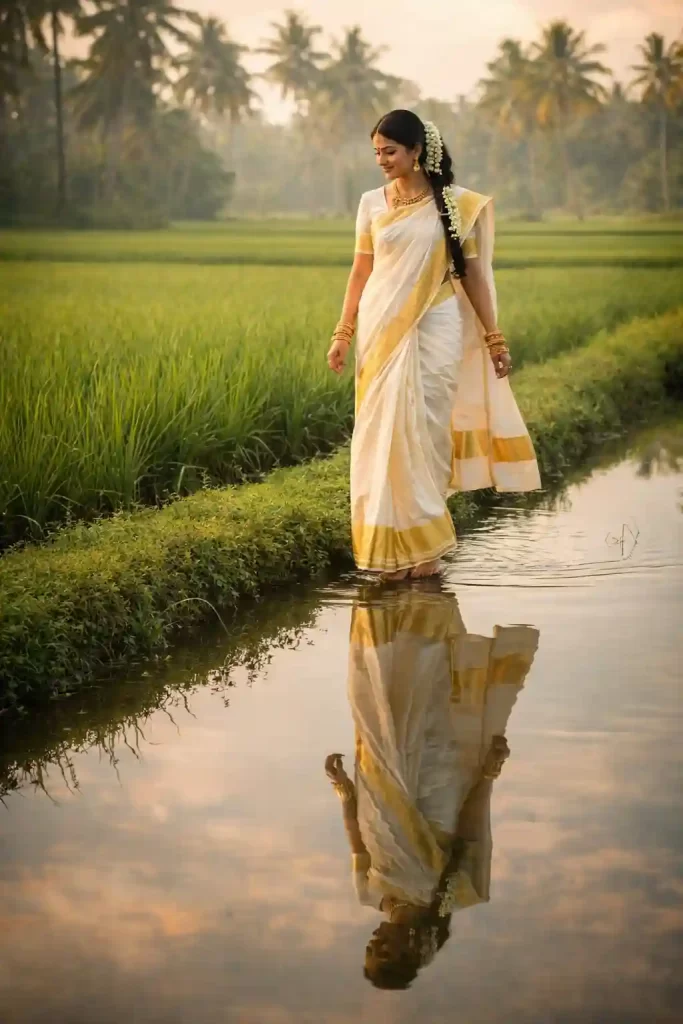
Kerala’s sarees embody simplicity and sophistication. The iconic Kasavu saree from Balaramapuram near Thiruvananthapuram uses fine local cotton for a crisp off-white or cream body contrasted by wide golden borders. “Kasavu” refers to the gold-coated silver zari threads, often sourced traditionally from Gujarat. No modern looms interfere—pure handloom creates a smooth, durable drape ideal for Onam festivities.
Women pair these with jasmine garlands, gold jewelry, and minimal makeup for a fresh, radiant look. Variations include thicker borders for weddings.
Other GI-tagged sarees include Kuthampully sarees from Thrissur (fine cotton with zari accents) and Kasaragod sarees from northern Kerala (vibrant borders and motifs).
Interesting fact: Kasavu sarees traditionally leave edges unstitched—frayed hems symbolize auspiciousness and longevity.
Tamil Nadu: Regal Silks and Temple-Inspired Designs
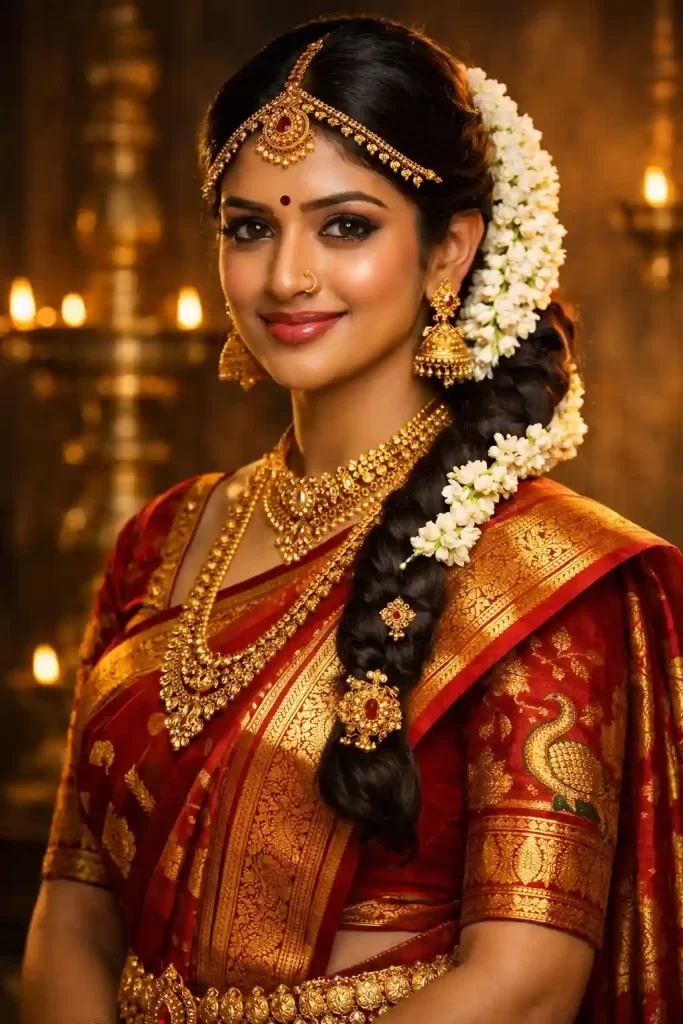
Tamil Nadu boasts some of India’s most luxurious sarees. Kanchipuram (Kanjeevaram) sarees from Kanchipuram town reign supreme. Pure mulberry silk and high-purity gold zari (50–65%) create heavy, opulent drapes with temple motifs—peacocks, rudraksha beads, mango paisleys, elephants. Brides favor them for weddings due to their grandeur and auspicious symbolism. The saree stiffens after rice-water soaking and sun-drying.
Chettinad kandaangi sarees from the Chettinad region dazzle with bold cotton checks and stripes in vivid colors like magenta-green or mustard-red. Lightweight and breathable, they reflect the opulent merchant heritage.
Kandangi sarees from Karaikudi (GI-tagged) feature earthy tones and temple borders. Thirubuvanam silk sarees and Arani silk add to the silk legacy. Madurai Sungudi uses tie-dye dots with natural dyes.
Interesting fact: Authentic Kanchipuram zari purity is tested by burning a thread—real gold ashes remain; fakes melt.
Karnataka: Subtle Luxury and Ancient Weaves
Karnataka excels in refined silks and cottons. Mysore silk sarees, state-controlled by Karnataka Silk Industries Corporation, use pure mulberry silk (Karnataka produces over 70% of India’s supply). Subtle silver-gold zari blends create understated elegance. Weaving traces to Tipu Sultan’s era in the 1700s.
Ilkal sarees from Bagalkot district (possibly 8th-century origins) mix cotton body with art silk pallu and borders via the strong “Tope Teni” loop-joining technique. Rich reds, purples, and motifs like elephants and temple towers dominate.
Udupi sarees offer lightweight cottons with traditional borders. Molakalmuru sarees feature intricate gold work.
Interesting fact: Mysore silk purity is ensured through government filature units—cocoons are reeled under strict standards.
Andhra Pradesh: Feather-Light Wonders and Temple Ties
Andhra Pradesh shines with airy, intricate sarees. Uppada Jamdani sarees from East Godavari use fine cotton or silk with jamdani (supplementary weft) motifs—feather-light and often sheer. GI-tagged, they feel luxurious yet breathable.
Mangalgiri sarees from Guntur keep plain cotton bodies with zari borders—no field motifs—for clean, devotional appeal at temples like Lord Narasimha’s.
Dharmavaram pattu sarees blend silk with rich pallus. Venkatagiri sarees add delicate zari work.
Interesting fact: Uppada Jamdani sarees can be so fine they pass through a finger ring, showcasing masterful weaving.
Telangana: Ikat Magic and Bold Patterns
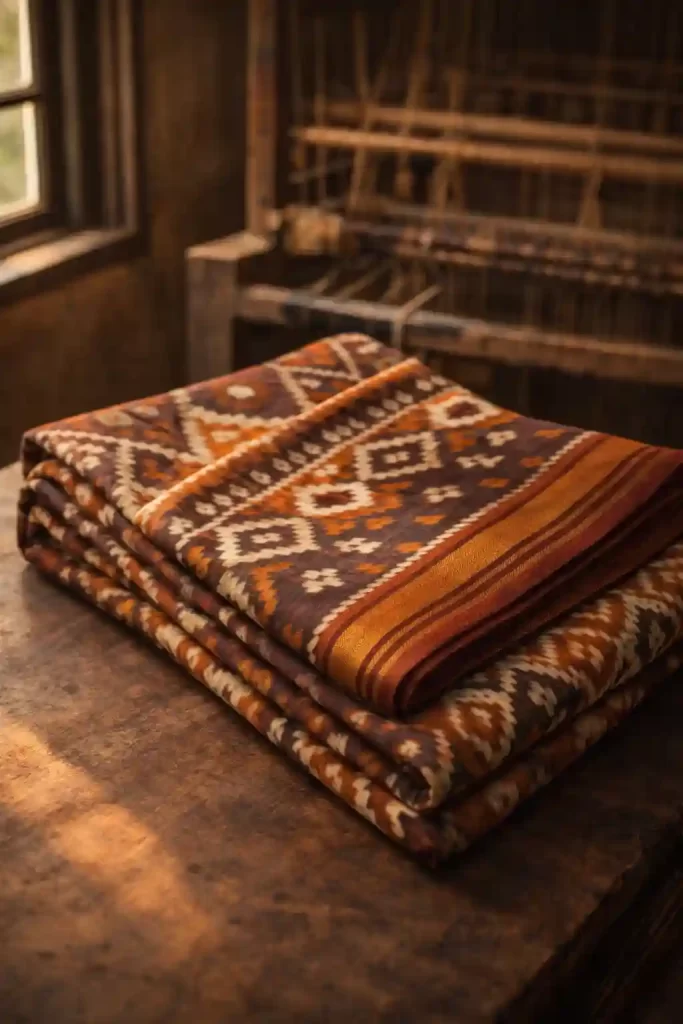
Telangana’s Pochampally ikat sarees from Yadadri Bhuvanagiri use tie-and-dye before weaving for geometric patterns with blurred edges—artistic and UNESCO-recognized. The village is on UNESCO’s tentative heritage list.
Gadwal sarees from Jogulamba Gadwal blend cotton body with silk borders—double-sided weave and compact folding (matchbox claim). Temple motifs and vibrant colors shine.
Narayanpet sarees feature checks and heavy pallus with golden borders. Siddipet Gollabama sarees add floral motifs.
Interesting fact: Pochampally ikat’s resist-dye technique creates unique “blurred” edges, distinguishing it from sharper ikats elsewhere.
Puducherry and Other Notes
Puducherry, with French colonial influence, features lighter cottons and fusion styles, though no major unique GI saree dominates. Traditional drapes often borrow from Tamil Nadu neighbors like Kanchipuram.
Lakshadweep has minimal documented saree traditions—local attire leans toward simple cottons due to island life.
South Indian Men’s Traditional Wear: Comfort Meets Ceremony
Men’s fashion prioritizes ease in the heat. The lungi—a rectangular cotton or silk cloth wrapped and knotted at the waist—dominates casual wear. White for festivals and grooms; colorful checks for daily use.
The veshti (dhoti) serves formal occasions—off-white or cream cotton/silk, draped with precise folds. Paired with angavastram (shoulder cloth, often white), it appears at weddings, temples, and rituals.
Variations include pattu veshti (silk with zari) for grand events in Tamil Nadu and Karnataka. In Kerala, mundu (similar to veshti) is common.
Interesting fact: The lungi’s knot adapts regionally—higher for fieldwork, lower for comfort—tracing to ancient Asian sarongs.
| State | Saree Name | Material & Key Features | GI Tag? | Famous For / Motifs | Occasion / Notes |
|---|---|---|---|---|---|
| Kerala | Kasavu (Balaramapuram) | Fine cotton body, gold zari border (silver threads coated gold) | Yes | Crisp white/off-white with wide gleaming gold border | Onam festivals, weddings; understated luxury |
| Kerala | Kuthampully | Fine cotton with subtle zari accents | Yes | Simple elegant weave, traditional borders | Daily & festive wear |
| Tamil Nadu | Kanchipuram/Kanjeevaram | Pure mulberry silk, high-purity gold zari (50-65%) | Yes | Heavy, temple motifs (peacocks, rudraksha, elephants) | Weddings, festivals; “queen of sarees” |
| Tamil Nadu | Chettinad/Kandaangi | High-quality cotton, bold checks/stripes | No | Vibrant colors (magenta-green, mustard-red) | Everyday, merchant heritage |
| Tamil Nadu | Kandangi | Cotton/silk mix, temple borders | Yes | Earthy tones, traditional patterns | Festive & daily |
| Karnataka | Mysore Silk | Pure mulberry silk, subtle silver-gold zari | Yes (KSIC patented) | Understated elegance, fine weave | Special occasions; state-controlled purity |
| Karnataka | Ilkal | Cotton body + art silk pallu/border, Tope Teni join | Yes | Rich reds/purples, elephants, temple towers | Traditional wear; strong seamless construction |
| Andhra Pradesh | Uppada Jamdani | Fine cotton/silk, jamdani supplementary weft | Yes | Feather-light, intricate motifs | Luxurious yet breathable; sheer quality |
| Andhra Pradesh | Mangalgiri | Combed cotton, plain body with zari border | Yes | Clean minimal design, Nizam-inspired | Devotional (temples), everyday |
| Andhra Pradesh | Dharmavaram Pattu | Silk with rich pallu | Yes | Vibrant borders, traditional patterns | Festive & bridal |
| Telangana | Pochampally Ikat | Cotton/silk ikat (tie-dye before weave) | Yes | Geometric patterns, blurred artistic edges | UNESCO tentative heritage; unique technique |
| Telangana | Gadwal | Cotton body + silk borders, double-sided weave | Yes | Compact (matchbox fold claim), temple motifs | Festivals; Tirupati deity adornment |
| Telangana | Narayanpet | Cotton/silk, checked body, heavy pallu | Yes | Golden borders, intricate designs | Traditional with historical migrations |
Did You Know?
South Indian sarees offer over 100 regional draping styles. The nivi drape (front pleats tucked at waist) gained popularity in the 19th century for modesty and ease, now standard across much of India.
Fun Facts
- Kanchipuram sarees can weigh 1–2 kg due to heavy silk and zari—up to 400 grams of gold in premium ones.
- Kasavu borders use threads traditionally coated in gold leaf for lasting shine.
- Ilkal’s Tope Teni join makes sarees tear-resistant even after decades.
- Gadwal sarees’ double-sided weave lets patterns show equally on both sides.
- Veshti draping varies by occasion—five-yard for daily, nine-yard ceremonial.
- Many sarees feature temple gopuram motifs symbolizing protection and prosperity.
South Indian fashion weaves together skill, history, and daily life. From a Kerala woman’s Onam Kasavu to a Tamil groom’s silk veshti, these pieces carry generations of stories. In a world of trends, they stand as living heritage—elegant, meaningful, and worth preserving. Whether for a festival, wedding, or quiet home moment, South Indian attire invites appreciation for craftsmanship that endures.

Leave a Reply